

 The Colored Conventions Project (CCP) is a scholarly and community research project focused on digitally preserving Black political activism from the 1830s to 1890s. Founded in a graduate class at the University of Delaware, the CCP brings together interdisciplinary scholars and students, librarians and independent researchers, national teaching partners and media specialists, academic institutions, and members of the public. In 2020, CCP became one of three flagship projects of the Center for Black Digital Research at Pennsylvania State University.
Over the course of the seven decades in the nineteenth century, Black men and women traveled to attend meetings advertised as “Colored Conventions.” These political gatherings offered opportunities for free-born and formerly enslaved African Americans to organize and strategize for racial justice. For example, the National Convention of Colored Men, held in October 1864, convened leading abolitionists, including Frederick Douglass, at the Wesleyan Methodist Church, which is still standing in downtown Syracuse. At that convention, organizers presented the Bill of Wrongs and Rights, a document outlining inequalities faced by African Americans. The CCP digitizes documents like these, along with period images related to the Colored Conventions Movement, to create interactive online exhibits that provide insight and understanding of early Black organizing.
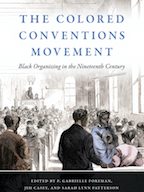
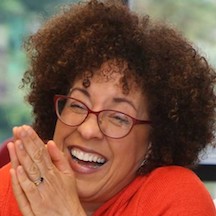 Gabrielle Foreman is the cofounder and faculty director of the CCP. She is is professor of English, African American studies and history, and holds an endowed chair in liberal arts at Pennsylvania State University. She is now serving as the 2021 Jeannette K. Watson Distinguished Visiting Professor in the Humanities at Syracuse Univerity. Professor Foreman is the lead editor of a new book The Colored Conventions Movement: Black Organizing in the Nineteenth Century (University of North Carolina Press, 2021.)
Dr. Foreman earned her bachelor’s degree in American studies at Amherst College in Massachusetts. She was in one of the earliest cohorts of the doctoral program in ethnic studies at the University of California, Berkeley. Before joining the faculty at Penn State in 2019, Dr. Foreman was the Ned B. Allen Professor of English and professor of history and Africana studies at the University of Delaware.