

Here is this week’s news of grants or gifts to historically Black colleges and universities or for programs of particular interest to African Americans in higher education.
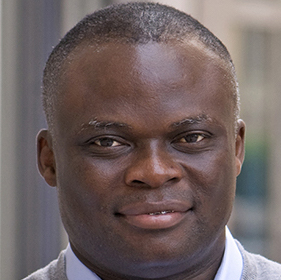 Washington University in St. Louis has received $5.7 million in two separate grants from the National Institute of Mental Health. One grant of $2.4 million will fund the study of the longitudinal impacts of an economic empowerment intervention on HIV risk prevention and care continuum outcomes among orphaned youth transitioning to young adulthood in sub-Saharan Africa. A second $3.3 million grant addresses child behavioral health among school-going children in Uganda. The projects are under the direction of Fred Ssewamala, the William E. Gordon Distinguished Professor at the Brown School at Washington University.
Five historically Black universities are sharing a $1.8 million grant from the U.S. Department of Education to fund the Next Generation Black STEM Teachers program. The goal of the program is to increase the number of highly trained and certified Black STEM teachers for both rural and urban school districts. Winston-Salem State University, the historically Black educational institution in North Carolina, is the lead institution. Also participating are Claflin University in South Carolina, Fort Valley State University in Georgia, South Carolina State University, and Virginia Union University.
Historically Black North Carolina Central University has been awarded a $550,000 grant from the U.S. Department of Energy to create a two-year traineeship program promoting fields associated with the DOE’s mission. The program, which is scheduled to begin March 1, and is titled “Promoting Undergraduate Minority Persistence in Nuclear Physics,” will focus on nuclear physics training. In addition, an emphasis will be placed on five professional development areas – self-assessment, identifying goals, building strategies, finding resources, and committing to timelines.
Fisk University, the historically Black educational institution in Nashville, has announced an endowment gift from Acrew Capital and its co-founder Theresia Gouw, which combines $1 million in cash with a $1 million interest in Acrew’s Diversify Capital Fund. This gift will allow the university to, for the first time, become an institutional investor in venture capital, an asset class that has traditionally been reserved for universities with much larger-sized endowments.
Historically Black Howard University in Washington D.C., announced that it received a two-year, $1 million grant from the New York Life Foundation. The grant will create the New York Life Scholars program at Howard University. The investment will focus on three areas, but the bulk of the funds will be allocated to students who are unable to complete their degrees due to gaps in funding. Awards will be distributed based primarily on financial need.