

by Al-Tony Gilmore
A Black coach has never won the NCAA Division I college football championship. It is the one collegiate major sports title that has been elusive for Black coaches, clearly because so few have been positioned to win the coveted crown. The prerequisite is more than just being hired as a head football coach, it is about being hired as head coach at schools with the most competitive programs.
Schools from the Power 5 athletic conferences – Atlantic Coast Conference (ACC), Big 10 Conference, Southeast Conference (SEC), Big-12 Conference, and Pac-12 Conference – are decidedly more advantaged because of their disproportionate share of the stronger teams, top recruited athletes, state-of-the-art facilities, and the enormous flow of revenue required to maintain a competitive edge.
The University of Notre Dame’s football program is the single exception, being an independent school with affiliation, but no membership, in an athletic conference. It compensates by having a prestigious brand identity; the financial resources generated by the program; the consistent high quality of players on the roster; and the scheduling of games with the nation’s most formidable teams. All combine to position it well for the national title.
The conferences of mid-major football schools such as the Mid-American, Mountain West, Sun Belt, Conference USA, and the American Conference, have some possibility of making the NCAA football playoffs because of the widening of the playoff field to 12 teams. Realistically, however, the chances are slight regardless of how well those teams perform over the season, because the 13-member selection committee gives automatic bids to the five highest-ranked conference champions with the four highest of those teams receiving a first-round bye.
The remaining selections favor schools from the Power 5 conferences, those having posted outstanding seasons but falling short of winning conference titles. That leaves maybe one and no more than two slots for mid-major conference schools whose most compelling case would be to have an undefeated season or one-loss record, preferably with a win over one of the better teams from the stronger football conferences. Such a scenario will be infrequent though not impossible.
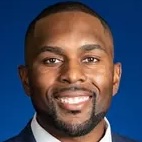
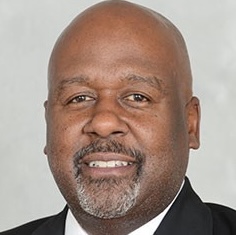
While Black athletes make up nearly half of all NCAA Division I football players, there are currently only 16 Black head coaches at NCAA Division I schools, representing just 12.3 percent of the head coaches at the 130-member institutions. Of those coaches, half are at either Power 5 conference schools or Notre Dame: Marcus Freeman (Notre Dame); Terry Smith (Penn State); Tim Skipper (UCLA); Sherrone Moore (Michigan); Deion Sanders (Colorado); Tony Elliott (Virginia); Mike Locksley (Maryland) and Fran Brown (Syracuse). The others are at the mid-major conferences: Willie Simmons (Florida International); Jay Norvell (Colorado State); Lance Taylor (Western Michigan); Derrick Mason (Middle Tennessee); Kenni Burns (Kent State); Charles Huff (Southern Mississippi); Jerry Mack (Kennesaw State); and Thomas Hammock (Northern Illinois).
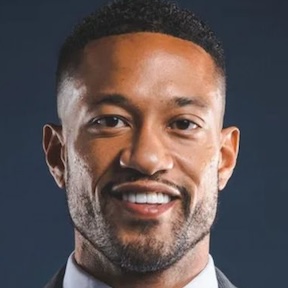
(Notre Dame)
Last season Marcus Freeman became the first African American serving as head coach to reach the national championship game, but his Notre Dame team lost to Ohio State. Noticeably as a sign of racial progress in collegiate sports, the pre-game media did not focus on the significance of what Freeman would have accomplished with a win, and Freeman to his credit downplayed that angle to the game by adroitly shifting the conversation away from himself and towards his team and staff.
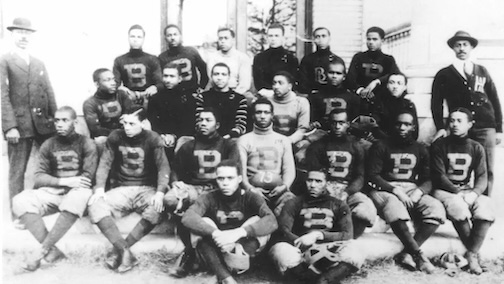
At the professional and collegiate levels, by 2025, Black coaches had virtually wiped away all malicious and race-based claims of an inability to win national titles, having won the World Series, NBA Championship, Super Bowl, and the NCAA basketball (men and women), soccer, tennis (men and women), and track and field championships (men and women), and having trained and coached well over 100 Olympic champions. It did not happen overnight. Rather it came in incremental steps, some more strenuous and challenging than others. But largely absent in the conversation are the triumphs and travails of early Black coaches and their efforts to level the playing field of athletic competition; to transform the lives of student athletes; to prove their coaching prowess; to remind America of the meaning of fair play and sportsmanship; to bench Jim Crow; to compete for national championships; and to assist in eliminating racism from both athletic competition and ultimately the American way of life.
In 2019, on the 150th anniversary of college football, ESPN unveiled its list of the 150 all-time greatest college football coaches. To its credit, eight of those coaches were from HBCUs and most coached during the segregation era. There should have been more and arguably some should be ranked higher, but the fact that ESPN considered their contributions in the context of the limitations placed on their coaching options makes the credibility of the list more plausible. They could only pursue national HBCU titles and none were considered for coaching vacancies at PWIs.
In ranking order they were: #5 Eddie Robinson, Grambling, 9 national titles; #53 Alonzo “Jake” Gaither, Florida A&M, 6 national titles; #71 John Merritt, Jackson State and Tennessee State, 7 national titles; # 103 Billy Nicks, Morris Brown and Prairie View, 6 national titles; #113 Vernon “Skip” McCain, Maryland State, #122 Marino Casem, Alabama State, Alcorn and Southern; 4 national titles # 143 Earl “Tiger” Banks, Morgan State, and #145 W.C. Gordon, Jackson State. To those more informed on the history of HBCU football, two names were conspicuously absent from the ESPN list: Henry Kean, Kentucky State and Tennessee State, 6 national titles, and Eddie Hurt, Morgan State, 6 national titles and a 54-game streak without a loss.
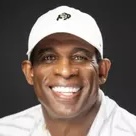
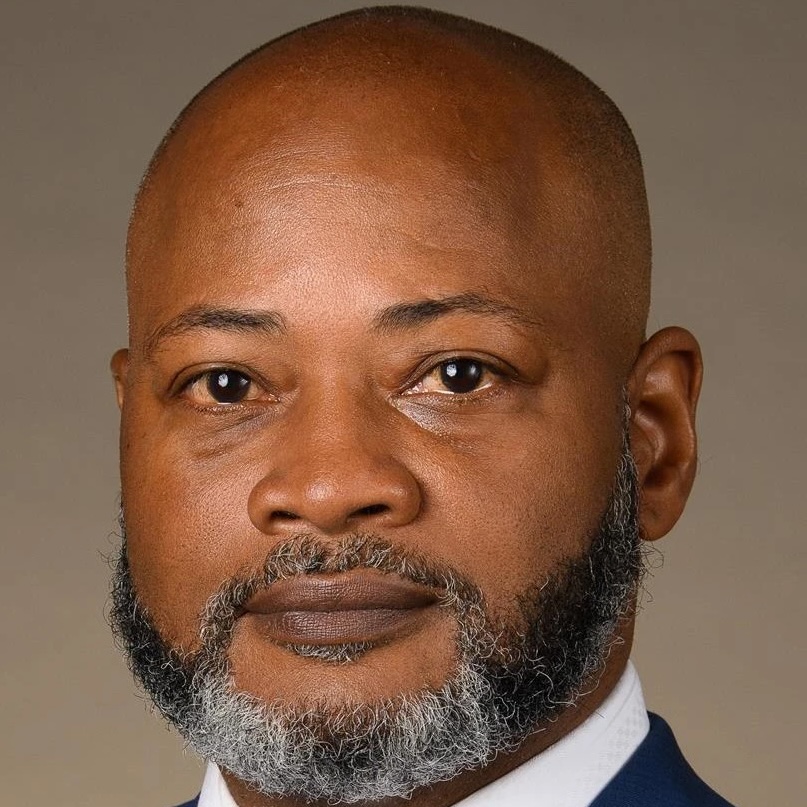
(University of Colorado)
Winning an NCAA Division I championship in any sport is prestigious and widely acclaimed, though until Willie Jeffries was hired as head coach at Wichita State in 1979, no Black coach had been hired as head football coach of a PWI Division I school. However, Wichita State, a school in the Missouri Valley Conference, was not a power conference school. Two years later, Dennis Green became head coach at Northwestern, a Power conference school, becoming the first Black coach positioned to win the NCAA title.

Before Jeffries, however, it is important to note that there were several Blacks appointed head coaches in other sports at PWIs, among them John McLendon (basketball, Cleveland State, 1966); Nell Jackson (track, Illinois, 1970); Fred Snowden (basketball, Arizona State, 1972); John Thompson (basketball, Georgetown, 1972); George Raveling (basketball, Washington State, 1972); and Marian Washington (basketball, Kansas, 1973).
Black coaches at HBCUs were uniformly denied opportunities to compete for national championships sanctioned by the NCAA, the anomaly being Howard in 1974 when it won the NCAA soccer crown under Lincoln Phillips becoming the first HBCU to win a NCAA Division I national championship. However, beginning in the mid-1930s and through the 1950s there were some extraordinary opportunities and results at the lower athletic levels such as the NAIA (National Athletic Intercollegiate Association) and the AAU (Amateur Athletic Union). Tuskegee Institute’s women’s track team, coached by Christine Petty and Cleve Abbott, won the integrated AAU national track championship meet 14 times between 1937 and 1951.
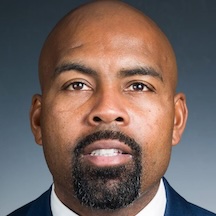
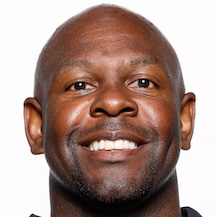
(Syracuse University)
With the fractional exception of track and field and the AAU, during segregation all Black collegiate head coaches were at HBCUs and limited to winning mythical “Negro” national championships determined by the outcome of games between teams selected by Black sports journalists of newspapers such as the Chicago Defender and the Pittsburgh Courier (which additionally selected an annual HBCU All-American football team). As was to be expected – because the best teams chosen by one newspaper were not always the same as the other – there were several years when two or more HBCUs would lay claim to being the national Negro football champion. One school, Florida A&M, became so obsessed with its self-acclaimed football superiority that it invited what it considered to be the best HBCU opponent to its Orange Blossom Classic game, with the winner being arbitrarily declared the national champion.
Some Black coaches and administrators hoped for more than “segregated all-Negro titles” and clamored to compete against PWIs. In 1951, 21 HBCU representatives, led by Mack Greene, athletic director of Central State, convened to form the National Athletic Steering Committee (NASC). The plan and strategy of the NASC was to meet with both the NCAA and NAIA and request that HBCUs be allowed to enter either or both of their national basketball tournaments. Initially, both the NCAA and the NAIA were cautious and guarded about allowing HBCUs to compete against PWIs for national championships. They were told by the NCAA there was “no championship apparatus which would accommodate black colleges,” because they were too small, recalled Naismith Memorial Hall of Fame basketball coach John McLendon in his book,co-authored with Milton Katz, Breaking Through: The NAIA and the Integration of Intercollegiate Athletics in Post World War II America. McLendon also remembered that the NCAA voiced fear over the style of HBCU basketball and straightforwardly expressing the belief that “your coaches may not be competent enough.”
Fortunately for the NASC, the leadership of the NAIA was more receptive and in 1953 unanimously approved that “all colleges for Negroes that meet the required standards” were eligible for NAIA membership and that it would sponsor a national tournament of NASC schools – designated District 29 – and the winning team would be eligible beginning in 1953 for participation in the NAIA national tournament held annually in Kansas City.
Greene wrote in the NASC newsletter with unbridled optimism: “The door is now open to all colleges for Negroes to world competition in basketball. Let’s prepare ourselves for all that it means!” It was the opening of the door for the best Black coaches – all then at HBCUs – to demonstrate the quality of their coaching skills. At least two generations earlier Black athletes at PWIs had manifested their worth as athletes, though all had been trained by White coaches. Black coaches and all Black teams in interracial games were what was different, and with the opportunity provided by the NAIA had something to prove.
The fan reaction to Tennessee State – the first HBCU to participate in the tournament in 1953 – was warm and receptive, and the sportswriters and NAIA officials all commented on the decorum and sportsmanship displayed by the Black team. But it was almost unavoidable that there would be race-related challenges and uneasy moments. One such incident was when Delta State University of Mississippi withdrew from the tournament when it was denied “protection” for playing against Blacks, meaning it wanted assurance that if they participated in the tournament they would not have to play against Black teams or players. Delta State officials claimed conditions in that district were so racially intense that an incident might occur in the tournament that would be regretted. The NAIA Executive Committee unanimously agreed that “at this particular time” Delta State should not enter the tournament. No such guarantee would be considered. It would have made a mockery of the tournament and the NAIA had drawn a line in the sand from which it would not retreat.
In 1956, two years after the Brown Supreme Court decision, one year after the brutal murder of Emmitt Till and the rise of Rosa Parks, Martin Luther King, Jr. and the Montgomery Bus Boycott, the governor of Louisiana followed his team, McNeese State, to the tournament after it had been pressured not to participate. He was prepared to withdraw his team should there be any racial flare-up. None did and ironically his team beat a Black team, Texas Southern, to win the tournament. Sportsmanship prevailed throughout the early years of Black participation in the tournament.
Within a year or so of the 1953 tournament, a number of PWIs began to schedule regular season games against HBCUs. This meant Black teams would be playing on largely White campuses and that PWIs would schedule games on Black campuses, sporting events unimaginable a few years earlier. During this period, HBCU football teams such as Maryland State (Eastern Shore), Kentucky State, Cheyney, Langston, and Lincoln (Pa.) began to schedule games against PWIs. In advance of the Brown v. Board decision of 1954, the NAIA tournament was becoming an integrated and interracial success, and in 1955 and 1958 respectively, the NAIA created a second and third division for HBCUs, meaning three HBCUs would be potentially eligible for the tournament.
But what should have put all doubts to rest about Black coaching ability occurred from 1957 to 1959 when Tennessee State, then coached by John McLendon, with star player Dick “Fall Back Baby” Barnett, won an unprecedented three consecutive NAIA tournament basketball titles, while introducing a style of play (fast break) and basketball strategies (four corner offense) that White coaches at major programs would come to emulate. McLendon was honored in a way no other Black coach had been recognized by a White athletic organization when he was named three times NAIA Coach of the Year. In 1962, he was hired to become head coach of the Cleveland Pipers of the American Basketball League, becoming the first Black head coach in professional sports.
Following Tennessee State’s streak, HBCUs such as Texas Southern, Grambling, Prairie View, Central State, Kentucky State, and Coppin would also be crowned champions. Aside from McLendon, in the early years of Black participation in the NAIA tournament one other Black coach was singled out for his coaching ability, Edward Adams of Texas Southern. Before McLendon’s dominance, his showing in the 1956 tournament was the best ever in the tournament. He defeated three PWIs in route to the title games before losing a closely contested game to heavily favored McNeese State. The NASC took pride in that accomplishment because it proved to racist naysayers that Black coaches and their teams could compete with PWIs. Adams’ teams went on to reach the quarter finals in 1957, and was third in 1958. He will always be remembered for “what might have been” because he compiled a 263-54 record in nine years before dying of a stroke in 1958 at the age of 48.
As a result of the increased numbers of HBCUs in the tournament with their excellent coaches, exciting players and innovative style of play, the NAIA enjoyed record attendance, widespread popularity and media coverage while setting attendance records. All major Black newspapers dispatched reporters to Kansas City, providing feature coverage of the Black teams and their coaches. The tournament is also credited with opening other doors previously locked to Blacks in Kansas City. The NAIA housed the HBCU teams in previously White hotels and made arrangements for them to be served in what had been exclusively White restaurants. The success of the NAIA experiment deserves more credit and recognition than it has received.
In 1957, the NCAA did find a championship apparatus for smaller schools when it established a Division II status for such schools, though most but not all HBCUs remained committed to the NAIA. A decade later, in 1967, Winston Salem Teachers College (now State University), coached by Clarence “Big House” Gaines, and led by Earl “Black Jesus” Monroe, won its basketball championship tournament. Gaines became the first Black coach to win an NCAA championship. Fittingly, both Monroe and Dick Barnett of Tennessee State were selected with their coaches, Gaines and McLendon, for the Naismith Hall of Fame.
HBCU coaches Nathaniel Frazier of Morgan State and John Chaney of Cheyney State won the NCAA title respectively in 1974 and 1978. Chaney, too, was selected for the Naismith Hall of Fame. The University of the District of Columbia with Coach Wil Jones won the title in 1982. Virginia Union has won the title more times than any HBCU – 1980, 1992 and 2005 – though its legendary and Hall of Fame Coach Dave Robbins was White.
There are lessons to be learned from the lessons taught by John Thompson when he became the first Black coach to win the NCAA Division I basketball title at Georgetown in 1984. In the post game interview, a reporter asked him what it meant and how it felt to be the first Black coach to have made that achievement. With equally measured and cynical restraint, Thompson expressed his gratitude to McLendon and Gaines for leading the way decades earlier by winning championships against teams from PWIs at a time when many Whites thought Black coaches incapable and inferior. He wanted the world to know he was not the first Black coach capable of winning the Division I championship, only the first to be favorably positioned to do so.
Collegiate athletics has never had an articulated policy of affirmative action or equivalent to the NFL Rooney rule which requires teams to interview at least one minority candidate for head coaching positions. But what in effect encouraged PWIs to consider Black coaches was a sequence of social movements and athletic events of the 1950s and 60s. The Civil Rights Movement and the Black Power Movement led to unprecedented racial integration in higher education and this overflowed into athletics when the 1966 NCAA basketball title was won by a virtually all-Black team at Texas Western (now the University of Texas at El Paso) when it defeated an all-White and perennially powerful University of Kentucky team.
That single athletic event emanated shock waves throughout college sports, becoming even stronger in 1970 when in the marquee game of the college football season, the University of Southern California with an all-Black backfield trounced the powerful but still racially segregated Alabama’s Crimson Tide. Those two games were crucial turning points in the desegregation of college sports, especially in the South, leading almost overnight to the nationwide recruitment of the best Black athletes in all sports. Competition for these athletes was fierce and to gain an edge in recruiting PWIs realized the value in hiring Blacks at lower-level assistant coaching positions. None were seriously considered to be in the pipeline for head coaching positions, but the door had been opened.
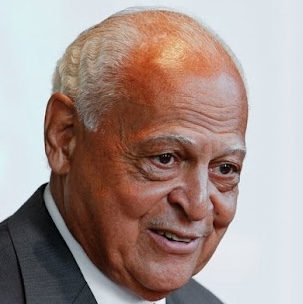
Willie Jeffries, who had served as an assistant football coach at Pittsburgh, walked through it in 1979 when Wichita hired him from a HBCU, South Carolina State, to be its head coach. Much like Jeffries, Dennis Green was in the first round of scores of Black assistant coaches hired by PWIs. Before being hired at Northwestern in 1981 he served as assistant coach at Dayton and Iowa, special teams coach for the San Francisco 49ers, and offensive coordinator at Stanford. In the decade before those two appointments, a small number of Blacks earlier referenced had become head basketball coaches at PWIs and that figure would grow at a much larger rate for basketball than football over the next several decades.
Jeffries and Green were trailblazers in college sports where Black representation on the field had grown exponentially but not on the sideline. Over four decades later, college sports leadership – especially in football – remains disproportionately White. Since 1981 only 39 Black head football coaches have been hired, slightly less than 10 percent of the hires for that position. Only 30 of 65 power programs have ever hired a Black head coach. But while those figures are somewhat disheartening, the overall collegiate landscape has been encouraging. As of the 2024-2025 academic year there were 1,003 Black head coaches and 4,487 Black assistant coaches across all sports in NCAA Division I. More important for the moment, there is now a slow-going but sufficiently expanding critical mass of Black football coaches at the right schools – a group whose numbers may ebb and flow – for one to win the NCAA football championship.
College sports and public opinion have now reached the stage where no credible opinion doubts the abilities of Black coaches to win the title. It is a matter of time, semi-inevitable, and when it does happen the final destination of the Black coaching journey in major college sports will have been reached. There will be celebration and satisfaction when the Black coaching train reaches that station, but memory for most may be fragile or nonexistent as to when and where the journey began: in the athletic departments of HBCUs when Black coaches first introduced themselves to the NAIA and the NCAA in the early 1950s.
 Dr. Al-Tony Gilmore is Distinguished Historian Emeritus of the National Education Association. He has served as a history professor at Howard University, the University of Maryland at College Park and as a visiting scholar at George Washington University. He has written widely on United States history, popular culture, HBCUs and the intersection of sports and society. His books include Bad Nigger: The National Impact of Jack Johnson (Kennikat Press 1975), Revisiting The Slave Community (Greenwood Press, 1978), All the People: NEA’s Legacy of Inclusion and Its Minority Presidents (National Education Association 2008), A More Perfect Union: The Merger of the South Carolina Education Association and the Palmetto Education Association (National Education Association 2012), and The Presidents and Executive Directors of the NEA and the ATA: A Biographical Directory (National Education Association 2011). His articles, reviews and commentary have appeared in The New York Times, The Washington Post, Commentary, American Scholar, New Republic, The Black Commentator and in the leading historical journals. A conference room has been named in his honor at North Carolina Central University, where he established the Al-Tony Gilmore Endowed Scholarship.

Thank you for writing this article. It’s another great history lesson. I’m looking forward to many more lessons.
Dr. Al-Tony Gilmore’s extraordinary erudition is always showing.
His command of enormous archival material and clarity of expression draws you in on subjects in which you never thought you had any interest.
Above all, he is the consummate “Teller” of our Stories, as a Griot in an African Village of Old –
Weaving the facts and experiences inextricably into the historical context that transcends the boundaries of subject matter into an elegant appreciation of what Baldwin would “language” as “the cost of the crown”, paid by Ancestral many.
For me, who has had the privilege of reading several of his “Offerings”, that is a mighty fine honed gift of scholarship to evoke and engage spirit as well as the intellect.
Thank You for this Essay and the opportunity to comment.
Respectfully submitted,
Betty S. Walker, Attorney at Law, Ret.
This should be a required course not only on the university and college level but in high schools that are supplying the students-athletes to so many institutions of higher learning. This should be done despite the efforts to disperse race based curriculum. How many young athletics know of Ollie Matson who played on an undefeated U of San Francisco football team that was denied playing in the Cotton Bowl, who later who an Olympic silver medal, and was traded for nine players to the LA Rams. One of many stories, our stories. My son knows these stories because Ollie told him and me.