

 Recently, the Rhodes Trust announced the 32 American winners of Rhodes Scholarships for graduate study at Oxford University in England. Rhodes Scholarships provide all expenses for two or three years of study at the University of Oxford in England and may allow funding in some instances for four years. Being named a Rhodes Scholar is considered among the highest honors that can be won by a U.S. college student.
The scholarships were created in 1902 by the will of Cecil Rhodes, an industrialist who made a vast fortune in colonial Africa. According to the will of Rhodes, applicants must have “high academic achievement, integrity of character, a spirit of unselfishness, respect for others, potential for leadership, and physical vigor.” Applicants in the United States may apply either through the state where they are a legal resident or where they have attended college for at least two years.
In 1907, Alain LeRoy Locke, later a major philosopher and literary figure of the Harlem Renaissance, was selected as a Rhodes Scholar to study at Oxford University. It is generally believed that at the time of the award, the Rhodes committee did not know that Locke was Black until after he had been chosen. It would be more than 50 years later, in 1963, that another African American would be named a Rhodes Scholar. Other African Americans who have won Rhodes Scholarships include Randall Kennedy of Harvard Law School, Kurt Schmoke, former mayor of Baltimore, and Franklin D. Raines, former director of the Office of Management and Budget and former CEO of Fannie Mae. In 1978, Karen Stevenson of the University of North Carolina at Chapel Hill was the first African-American woman selected as a Rhodes Scholar.
This year, nearly 2,800 students began the application process and 965 students were endorsed by 264 different colleges and universities. Committees of Selection in each of 16 U.S. districts interviewed the 238 finalists.
Including this year’s cohort, 3,706 Americans have won Rhodes Scholarships, representing 329 colleges and universities.
The 32 Rhodes Scholars chosen from the United States will join an international group of scholars chosen from 25 other jurisdictions (more than 70 countries) around the world, and two Global Scholars from any country in the world without its own scholarship. Over one hundred Rhodes Scholars will be selected worldwide this year, including several who have attended American colleges and universities but who are not U.S. citizens and who have applied through their home country.
Typically, the Rhodes Trust does not reveal the race or ethnicity of scholarship winners. Of this year’s 32 Rhodes Scholars from the United States, it appears that five are Black. A year ago, four of the 32 Rhodes Scholars were African Americans. In both 2017 and 2020, there were 10 African American Rhodes Scholars, the most in any one year.
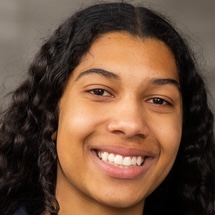 Alice L. Hall, from Philadelphia, is a senior at the Massachusetts Institute of Technology, where she is majoring in chemical engineering and Spanish. She was elected MIT student body president, where she leads an executive committee of more than 40 student leaders. As a leader in the MIT D-Lab, she collaborated with a women’s collective in Ghana to design sustainably powered tools for shea nut processing. She is a member of the women’s varsity basketball team. At Oxford, Hall intends to pursue a Ph.D. in engineering science.
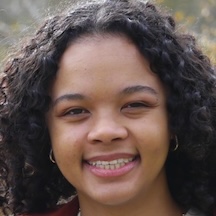 Victoria M. Harris, from Houston, is a senior at the University of Chicago, where she majors in anthropology and creative writing. Her academic work as an archaeologist aims to excavate the legacy of the African diaspora. She has conducted archaeological excavations across the U.S., from Tulsa to New Orleans, and has served as a research assistant for the Midlo Center for New Orleans Studies and the Chicago History Museum. Harris’ creative writing, including a selection of poems and short stories, has been published in Blacklight Magazine. She is also an accomplished violinist who performs with the University Chamber Orchestra of the University of Chicago. In England, Harris will pursue a master’s degree in African studies followed by a master’s degree in archaeology.
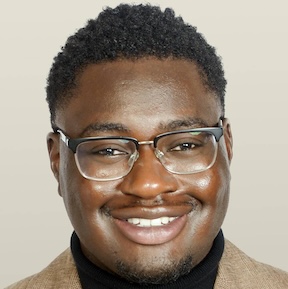 Hadi M. Kamara, from Alexandria, Virginia, is a senior at Princeton University in New Jersey, where he majors in politics. Before coming to Princeton, Hadi enlisted in the military, where he served as a C-130 crew chief in the U.S. Air Force Special Operations Command. In this role, he helped direct logistics and food distribution for thousands of refugees during the 2021 evacuation of U.S. allies from Afghanistan. Following his service, he went on to complete an associate’s degree in business administration at Northern Virginia Community College. Hadi’s academic work as an undergraduate focused on international relations, and he also completed an internship at the Pentagon’s Office of the Under Secretary of Defense for Policy. At Oxford, Kamara will pursue a master’s degree in international relations.
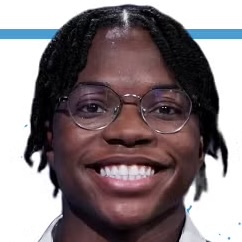 Olurotimi M. Kukoyi, from Hoover, Alabama, is a senior at the University of North Carolina, Chapel Hill, where he majors in health policy and management. As an intern in the North Carolina Department of Health and Human Services, he developed policies to advance value-based care for residents across the state. As a summer intern in Nigeria, he designed and built digital tools to support the implementation of better health care decision-making. Kukoyi has worked with the UNC Student Health Action Coalition to help provide free health services to uninsured and underinsured state residents. He was elected senior class president and is a Truman Scholar. He also recently completed his first marathon. At Oxford, Kukoyi will study for a master’s degree in health improvement and evaluation and a master’s degree in evidence-based social intervention and policy.
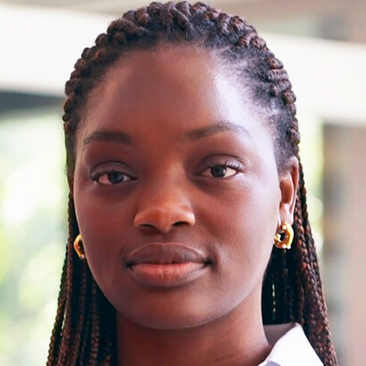 Florence N. Onyiuke, from Altamonte Springs, Florida, is a senior at the University of Pennsylvania, where she is completing a dual degree in international studies and business. Her senior thesis focuses on the informal economy and socioeconomic mobility and is based on ethnographic interviews that she conducted in Spanish with West African scrap metal collectors in Barcelona. Onyiuke founded the Community Research Initiative to improve data access for Black-owned businesses and nonprofits in West Philadelphia and has interned at J.P. Morgan and McKinsey & Company. At Oxford, she intends to pursue a master’s degree in African studies followed by a master’s degree in sustainability, enterprise and the environment.

On the Morehouse College website, Anisba Jean-Baptiste N’guessan, a 2026 senior graduating from Morehouse Colllege was named a 2026 Rhones Scholar. His name is NOT included on this list. This there a reason why he was excluded?
Because, as explained in the post, the list includes the Rhodes Scholars who are United States citizens. There are 32 U.S. Rhodes Scholars each year but more than 100 in total. Some of the non-American scholars – like Mr. N’guessan – attend colleges and universities in the United States.
Let’s be honest JBHE, three of these persons selected are definitely African Immigrants and the other two have the sight of biracialty. In other words, the US Rhodes Scholar didn’t select any native-born Black Americans this time around. We wonder why!