

by S. Keith Hargrove and Phyllis W. Dawkins
Many of us are very familiar with how disruption impacts business and corporations regarding meeting customer demands and needs. The pandemic surfaced inefficiencies and vulnerabilities in the U.S. supply chain and truly tested the executive leadership to manage the workforce, operations, and the unpredictability of consumers.
Higher education also experiences disruption in very similar ways, though potentially to a lesser degree. Whether state-supported or a private institution, both have some level of sustainability to continue to educate students and be engaged in research and institutional learning. Thus, leadership practices are necessary to survive the turbulent and progressive times of existence to meet student needs. Whether a CEO or university president, having key skills, habits, practices, or competencies are necessary to guide the organization and provide the leadership to attain desired goals.
In the tradition of Stephen Covey’s well-known publication, Seven Habits of Highly Effective People (Simon & Schuster, 1989), we would like to share our perspectives on some key leadership competencies, traits, or habits that are necessary for the academic environment. This is a continuous and consistent practice and behavior for decision-making. Our reflection is based on three or more decades in higher education, completing multiple leadership development programs, and achieving the administrative rankings of Chancellor/President at two Historically Black Colleges & Universities (HBCU). In fact, the suggested practices are the framework from the HBCU Executive Leadership Institute (ELI) program hosted by Clark Atlanta University. The HBCU ELI is the cornerstone for professional leadership development at HBCUs, offering 13 core and executive competencies for success and effectiveness. In our judgement, here is a summary:
First, the need to understand oneself is typically the primary trait to possess in order to lead others. Without a clear understanding of who you are, your values and integrity, and what you stand for will ultimately result in a downfall that will be difficult to recover. In a leadership position in higher education, you are constantly challenged by your values and principles, juxtapose to the policies and procedures of the university. Your persona and character also represent the university, wherever you are, and your behavior and attitude. In this case, the need to “lead by example” sets the tone and culture for the environment. Constantly assess yourself through reflection, as this will play a pivotal role in how you make decisions. You must also recognize the same attributes in other people. Thus, continue to expand your emotional intelligence and appreciation of others in your organization. This awareness will assist with any desire for culture change and fundamental management of people.
Second, knowing and setting a destination for the organization is also paramount. One famous quote says, “If you don’t know where you are going, any road will get you there.” Meaning, lack of vision will allow you to wander and be a leader without purpose. This habit is about constantly using the destination to help shape business practices, resource allocation, budgets, and academic priorities. In many ways, it is the question “Who are We?”, as an academic institution, and “Who do We Want to Be?” A leader will collectively gather the troops and help answer these questions before going forward. It is also not as simple as it may seem, and a process that may take a year or more to answer within the university. However it will define purpose, which is essential for growth, impact, and sustainability.
Third, once the destination (purpose) is defined, now you must lay out the roadmap. In other words, how and what will you do to get to your destination. It also means setting priorities but mostly focus on developing a strategic plan that provide tasks, milestones, accountability, collective empowerment, continuous improvement, and ongoing strategic thinking through widespread communication. In other words, everyone must be on board, part of the plan and have a role, and opportunities to celebrate successes and learn from failure. This habit also promotes consensus-building in decision-making, even though it extends the time schedule. The benefit is buy-in during the deployment phase, which may be more important than the actual decisions themselves.
Fourth, a leader is constantly building relationships. The variability and level of personal relationships may be dependent on roles and positions, but an effective leader must establish these relationships at all levels of the organization (students, faculty, staff, alumni, and board members). All relationships are a function of respect, trust, empathy, accountability, loyalty, values and morals, and collaboration. Leaders must also identify, build, and empower their team in order to accomplish the vision of the organization. The “executive” team of key individuals must deploy a viable strategic plan and symbolically represent a hierarchical structure for organizational change. The relationships also extend outside the organization (community, funders, etc.), which are essential to have an impact on the regional and social environment. Thus, relationships are critical to implement strategic goals of the organization and leader effectiveness.
Fifth, knowledge of fiscal and operational activities of the organization is important. A clear understanding of how financial and revenue resources are channeled into the organization is just as important as how they are expended to operate the organization. Though you may not have the expertise of the financial officer, it is critical you have more than a basic knowledge of how funds are received (such as fundraising) and allocated throughout the enterprise. Fiscal management should be reflected by careful monitoring and oversight of metrics and ratios; as well as audits accreditation standards, that indicate the health of the organization and the priorities of strategic goals and objectives of the organization.
Sixth, one of the most important activities that happen within an organization is decision-making. Decision-making happens at all levels of the organization, but certainly as a hierarchical structure and framework that is essential based on authority, accountability, performance and outcomes, regulations and policies, roles and responsibilities, and positions. For academic institutions, a board of governors or trustees typically reign over the institution via the president, but governance also exists amongst faculty, staff, and students in a variety of frameworks for decision-making and oversight. Navigating board governance involves clarity and alignment on roles of the HBCU leaders and members of the board and creating effective partnerships to advance the university. Even when issues and challenges arise (which they will), the decision-making process of HBCU leaders and the board are critical for institutional stability, order, and overall performance.
Seventh, no matter the type of organization or enterprise, each has its own culture. Culture is essentially how the employees view themselves, the institution, leadership, attitude and behavior, and performance in their roles and responsibilities. Often times, customer service becomes the barometer of culture and climate of the institution. Changing culture can be an exhaustive process, but it is indeed essential to pursue the vision of the organization and align with the strategic plan. The key components of changing culture are strong communication and transparency of purpose, and the promotion of empowerment amongst everyone in the enterprise. Further, a leader must demonstrate an entrepreneurial mindset with ideas for culture transformation, that combines flexibility, creativity, and data-driven outcomes.
As a leader in higher education, we believe all of us are leaders in our own way, irrespective of titles and authority. Let’s continue to elevate our HBCUs with this mindset and seek to demonstrate leadership that aligns with the vision and mission of our institutions.
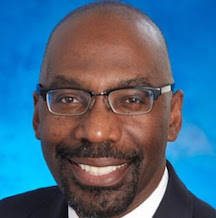 S. Keith Hargrove currently serves as Chancellor at Elizabeth City State University in North Carolina. He previously served as provost at Tuskegee University in Alabama. He also served as dean of the College of Engineering at Tennessee State University. He is a strong advocate of leadership development and promoting underrepresented groups pursuing and completing undergraduate and graduate degrees from Historically Black Colleges & Universities. He received his bachelor’s degree in mechanical engineering from Tennessee State University, a master’s degree from Missouri University of Science & Technology, and a Ph.D. from the University of Iowa. He completed the HBCU Executive Leadership Institute at Clark Atlanta and the Higher Education Leadership Foundation (HELF) program.
 Phyllis Worthy Dawkins served as the eighteenth President of Bennett College in North Carolina, where she led a bipartisan legislative effort with UNCF that resulted in $1.2 billion in loan forgiveness for HBCUs and spearheaded the national #StandWithBennett campaign, raising $9.5 million in 60 days. She currently serves as Executive Program Director of the HBCU Executive Leadership Institute at Clark Atlanta University, supported by major philanthropic and corporate funders. A former provost, tenured professor, and national board leader, she holds degrees from Johnson C. Smith University in Charlotte, the University of Michigan, and Ohio State University.