

by M. C. Brown II
For generations, historically Black colleges and universities (HBCUs) have been primarily characterized by the demographics of their student populations rather than by their institutional achievements. This framing, while acknowledging their important historical role, has often overshadowed their measurable performance and contributed to chronic under-investment. A significant shift is now underway, driven by two powerful forces: the comprehensive, data-driven analysis presented in “The American Dividend” report from the Thurgood Marshall College Fund’s (TMCF) Dr. N. Joyce Payne Research Center (Payne Center), and the transformative, trust-based philanthropy exemplified by MacKenzie Scott’s 2025 giving. Together, they mark a pivotal moment where HBCUs are increasingly being evaluated based on their institutional outcomes and national contributions.
The Payne Center’s report, released in early November 2025, stands out for its empirical rigor and strategic perspective. It advances the conversation from narrative to evidence-based assessment. The research reveals what it identifies as a “national paradox”: institutions delivering extraordinary outcomes despite operating with significantly constrained financial resources.
“The American Dividend” findings focus primarily on the member institutions of the Thurgood Marshall College Fund, which educate 80 percent of all HBCU students and represent the largest, most accessible pathway to higher education excellence in the HBCU ecosystem. These institutions confer 8,084 STEM degrees annually and house 80 percent of all ABET-accredited engineering programs at HBCUs, while representing 85 percent of high research-activity (R2) HBCUs. This positions these campuses as critical infrastructure for national innovation in agriculture, technology and healthcare. As engines of economic advancement, graduates from these institutions reach the middle class at a rate nearly 50 percent higher than graduates from other institutions. This is the “American dividend” – a direct, measurable contribution to national competitiveness, innovation and opportunity. The scale and reach of TMCF institutions amplify their collective impact on workforce development and social mobility across the nation.
Yet this impressive output exists alongside a challenging financial reality. The report documents substantial funding disparities that limit institutional potential. TMCF member institutions, despite serving the vast majority of HBCU students, often operate with constrained endowments and receive disproportionately modest per-student resources. The Payne Center report frames this efficiency gap as both a testament to institutional effectiveness and an urgent opportunity for strategic investment – investments that allow these institutions to expand their already substantial contributions to national workforce development, research capacity and social mobility. The report underscores that all HBCUs, regardless of governance structure, play vital roles in American higher education and deserve equitable support commensurate with their demonstrated impact.
MacKenzie Scott’s philanthropic approach offers a compelling model of this universal support. Her 2025 giving via Yield Giving directed approximately $783 million in unrestricted gifts to 16 HBCUs across the entire ecosystem. By providing substantial, no-strings-attached gifts, Scott has demonstrated a philosophy of institutional empowerment. Her approach appears to recognize these institutions not as challenges requiring management but as high-performing assets worthy of scaling. By entrusting HBCU leadership with unrestricted capital, she exemplifies a philanthropic model focused on capacity building and institutional autonomy.
Scott’s 2025 giving serves as a powerful catalyst within the higher education funding ecosystem. It reflects confidence in institutional capacity and measurable impact across the entire HBCU landscape. Her sustained commitment to the Thurgood Marshall College Fund – $70 million in September 2025 following an initial $50 million in 2020 – demonstrates the kind of ongoing partnership that enables transformative institutional development for the institutions serving the broadest population of students.
Additionally, her $70 million gift to the United Negro College Fund (UNCF) supports a pooled endowment benefiting member institutions, while her direct gifts to institutions such as Howard University ($80 million), Hampton University, Tuskegee University and dozens of others demonstrate comprehensive ecosystem support.
When a philanthropist of Scott’s prominence invests at this scale based on demonstrated performance across all HBCUs, it invites other stakeholders to reconsider their approaches: state systems examining resource allocation formulas; federal agencies designing research funding mechanisms; and foundations considering their investment strategies. Her model raises an important question: If the data demonstrates these institutions are delivering exceptional returns on investment, how can funding structures better reflect that reality?
The convergence of this research and this philanthropy create a compelling framework for action. The Payne Center report provides the evidence: comprehensive proof of productivity and impact. MacKenzie Scott models an effective response: a capital allocation strategy that respects and amplifies institutional strengths across the entire HBCU community. The task now is systematic implementation.
Policymakers can use this data to inform equitable funding frameworks. State and federal allocations can be explicitly linked to measurable outcomes in STEM education, research advancement and social mobility. Philanthropists can build on Scott’s approach by shifting from narrowly restricted project funding toward flexible institutional investments that empower leaders to allocate resources strategically. Corporate partners can evolve from standalone scholarship programs to comprehensive talent pipelines that recognize HBCUs as premier sources of skilled graduates.
The year 2025 may mark an inflection point. The release of “The American Dividend” provides the analytical framework to articulate HBCU value in terms of measurable national impact. MacKenzie Scott’s philanthropy demonstrates the effectiveness of evidence-informed investment across the entire HBCU ecosystem. The opportunity ahead is to create a future where such alignment becomes standard practice – where investment in all HBCUs consistently reflects the substantial returns they deliver to students, communities, and the nation.
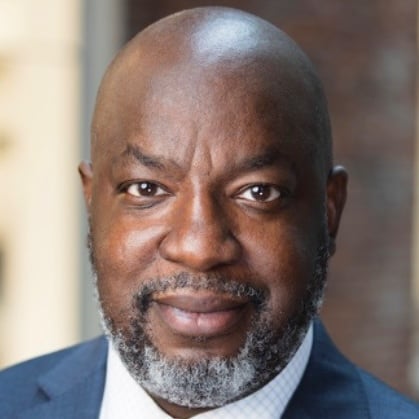 M. C. Brown II is the executive director of the Payne Research Center at the Thurgood Marshall College Fund. Dr. Brown is a graduate of South Carolina State University, where he majored in elementary teaching. He holds a master’s degree in educational policy analysis from the University of Kentucky and a Ph.D. in higher education administration from Pennsylvania State University.

The importance of addressing the funding disparities among HBCUs is very critical in raising awareness of their value and efforts to educate those students that they serve. The issue of ensuring the effectiveness of all student support programs that can lead to higher degree completion rates within each institution is also critical to the overall mission and objectives for each HBCU. Having internal audits and annual assessments of existing programs and policies can enhance their visibility to the academic community as well as other stakeholders. As someone who has consulted with some of these institutions, I know that they can indeed prosper even more if they take these important steps. I hope that the Payne Center at the Thurgood Marshall College Fund will imbed this component to what is needed to lift up all of these valued institutions.