

by Lindsay Johns
Back in 1970 on his seminal track “Whitey on the Moon,” the raspy yet still mellifluous tones of jazz poet Gil Scott-Heron provided us with a trenchant critique (not to mention a devastatingly powerful racialization) of the 1969 Apollo moon landing program, railing in his own inimitably iconoclastic way against the amount spent on the Cold War-era Space Race and lunar endeavor at a time when many millions of African-Americans were still living in, if not dire poverty, then severely straightened economic circumstances.
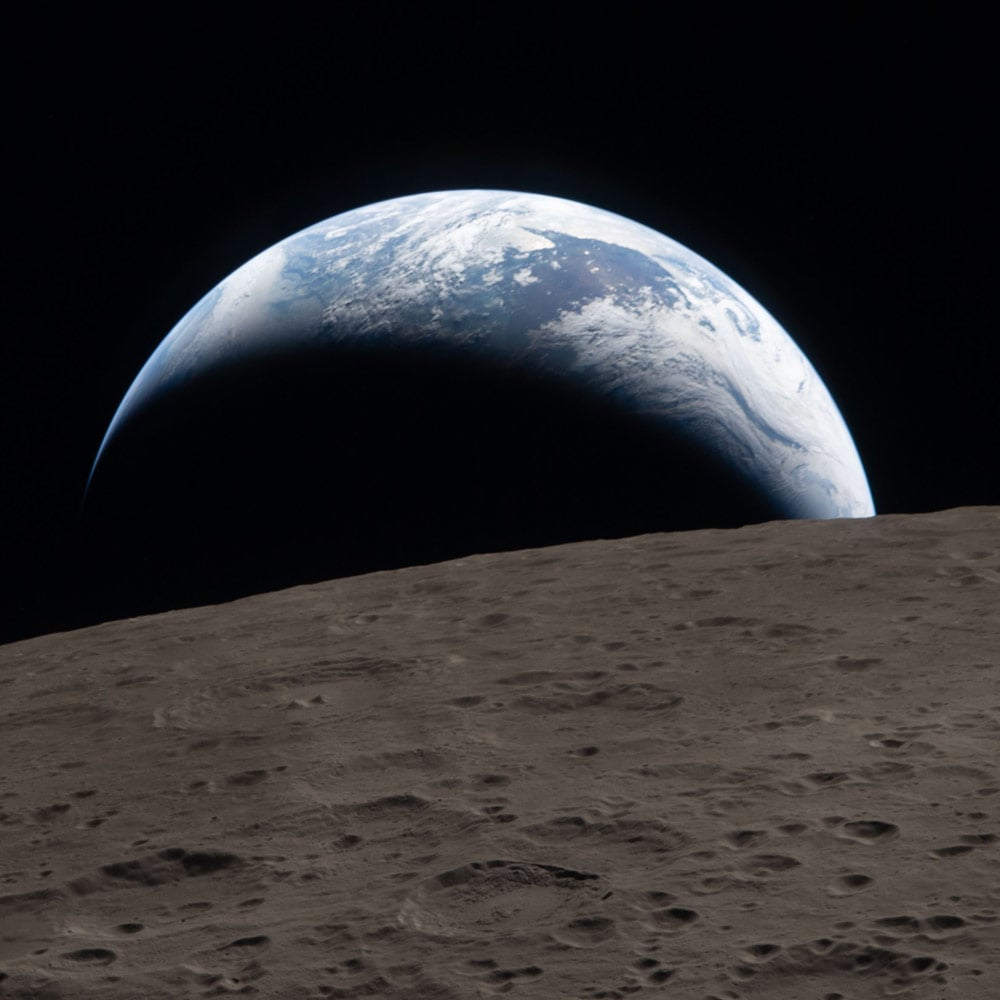
Scott-Heron’s sardonic words have been on my mind lately, since, like many millions of people around the world, I have been transfixed by NASA’s recent Artemis II space mission. As the four astronauts intrepidly voyaged a quarter of a million miles away from earth beyond our planet – deeper and further into space than humanity has ever ventured before, observing parts of the far side of the moon which no human eye has ever seen, I have consistently marveled at their bravery, mental fortitude, and emotional resilience, not to mention cosmological audacity. The sheer magnitude of this bravura feat of scientific, mathematical, and engineering prowess had me enthralled and also profoundly humbled at what man can achieve when he comes together for a common purpose and strives to elevate the human spirit.
Despite – or perhaps because of – the plethora of wars, atrocities, and chronic geo-political instability currently ravaging the world in 2026, the Artemis II mission managed to successfully juxtapose our myopic terrestrial concerns and the ephemerality of earthly grandeur with mankind’s intrinsic cosmic insignificance and the boundless plenitude of outer space. One thinks immediately of the American scientist and astronomer Carl Sagan’s famously beautiful and painfully apposite “Pale Blue Dot” speech.
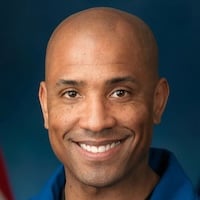 It was therefore all the more gratifying to see that NASA’s Artemis II mission comprised a Black astronaut in the team of four – Victor Glover, who had himself made history in 2020 when he became the first Black crew member of an ISS Expedition to live on the International Space Station long term. As the first Black astronaut assigned to a lunar mission, Glover chose to emphasize that “I’m not making Black history – it’s human history.” Whilst he did not attend an HBCU, Glover was awarded an honorary doctorate in 2024 by Howard University and is referred to by Howard as a “son of The Mecca.”
Whether it is right or not to racialize this momentous cosmic achievement, Earth – the planet on which we reside and on which we daily live out our brief terrestrial sojourn – is still sadly beset with inveterate racial prejudice and rampant racial inequality. As the oft-repeated platitude goes, we can send men to the moon, but we still persist in judging each other by the color of our skin. Go figure!
Glover’s involvement in the Artemis II mission is both a giant step for Black people and a gargantuan leap for the human race. The two are by no means mutually exclusive and it is evidently a false binary to suggest otherwise. Yet, as he was undoubtedly acutely aware, Glover owes a colossal debt to the plethora of Black pioneers of space travel who came before him, many of whom attended (or have strong ties to) HBCUs.
Literally standing “on the shoulders of giants,” Glover follows in a noble and august line of African-American mathematicians, engineers, scientists, and astronauts who have had to endure adversity, cross myriad boundaries and smash through glass ceilings, both on Earth and in space, to pave the way for his own odyssey of cosmic exploration. Below are a few of the Black aerospace titans who, in their respective ways, made Glover’s formidable feat possible.
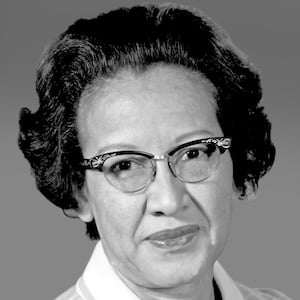 Katherine Johnson (1918 – 2020) was a graduate of historically Black West Virginia State University and a mathematician whose calculations of orbital mechanics were fundamental to the safety and success of multiple space missions, including the first lunar landing. In honor of her contribution, Johnson was awarded both the Congressional Gold Medal and the Presidential Medal of Freedom, and her story was immortalised in the 2016 film Hidden Figures.
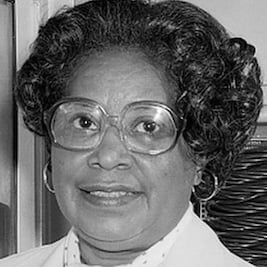 Mary Jackson (1921 – 2005) was a mathematician and aerospace engineer who, after graduating from historically Black Hampton University with degrees in mathematics and physical sciences, became NASA’s first Black female aerospace engineer in 1958. One of the three protagonists of the film Hidden Figures, in 2019, she was posthumously awarded the Congressional Gold Medal, and in 2021, the Washington headquarters of NASA was renamed the Mary W. Jackson NASA Headquarters.
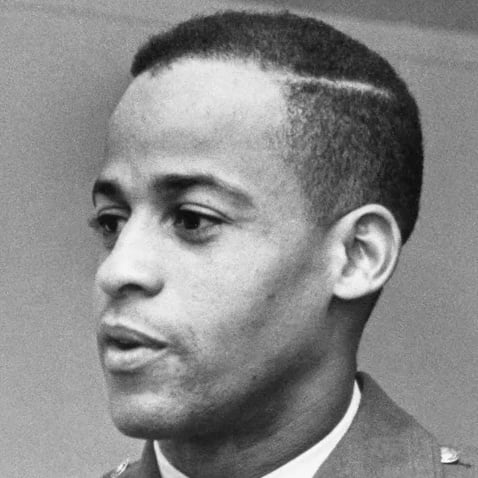 Ed Dwight, Jr. (1933 – ) was a renowned sculptor, author and USAF test pilot who, in 1961, under the direction of President Kennedy, became the first African-American to enter the Air Force training program from which NASA selected astronauts. Although he completed training in 1963 and advanced to the second round of the program, he was ultimately not selected. However, in 2024 at the age of 91, with remarkable poetic justice, Dwight finally traveled into space on the Blue Origin NS-25 mission, thereby becoming the oldest person to ever participate in a spaceflight – a record previously held by the actor and Star Trek legend William Shatner.
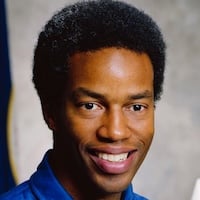 Guion Bluford (1942 – ), an aerospace engineer, Air Force fighter pilot, and astronaut from Philadelphia, was educated at Pennsylvania State University. After a career in the Air Force, he participated in four Space Shuttle flights between 1983 and 1992. In 1983, as a member of the crew of the orbiter Challenger, he had the distinction of being the first African-American in space.
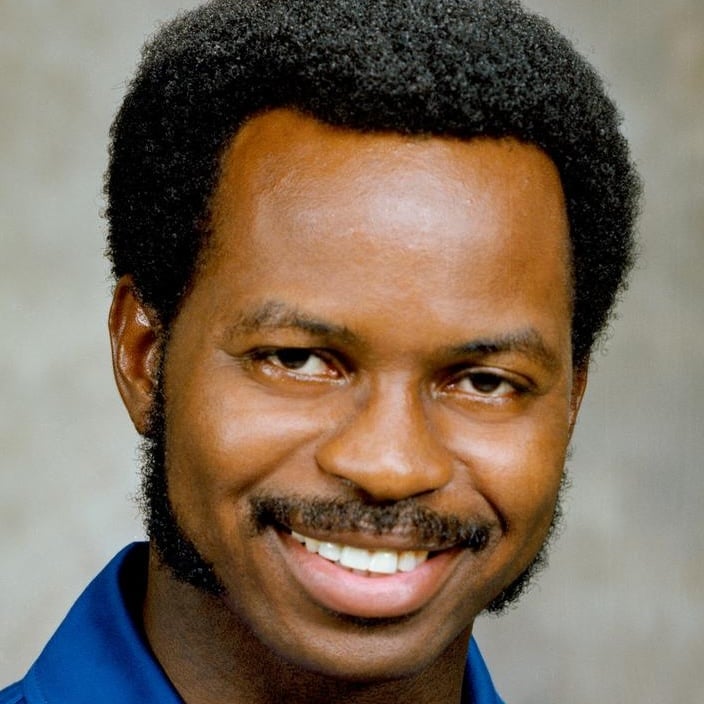 Ronald E. McNair (1950 – 1986), a trailblazing physicist and astronaut from South Carolina, graduated summa cum laude with a degree in physics from historically Black North Carolina A&T State University. He went on to receive a Ph.D. in physics from the Massachusetts Institute of Technology. A black belt in karate, he became NASA’s second African-American to go to space in February 1984. Yet on January 28, 1986, he was one of seven astronauts who tragically perished on the Space Shuttle Challenger.
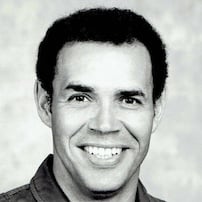 Frederick Gregory (1941 – ) was a decorated Air Force helicopter pilot in the Vietnam War, before becoming an astronaut and the first African-American to pilot and command a space shuttle mission. He also served as NASA’s Deputy Administrator from 2002 and was Acting Administrator of NASA in 2005. While he attended the Air Force Academy, he was involved in mentoring students at North Carolina A&T State University.
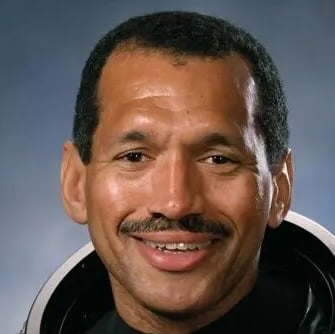 Charles Frank Bolden, Jr. (1946 – ) served as a United States Marine Corps Major General from South Carolina. He was an astronaut who flew on four Space Shuttle missions. Later, he was appointed by President Obama in 2009 as the first Black administrator of NASA, serving until his retirement in 2017.
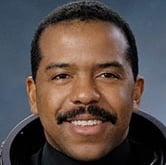 Bernard A. Harris Jr. (1956 -) is a Texas native and a physician. He graduated from the University of Houston and became the first Black astronaut to walk in space. He has subsequently established programs for future HBCU Astronaut Scholars and acts as a mentor to HBCU students interested in becoming astronauts.
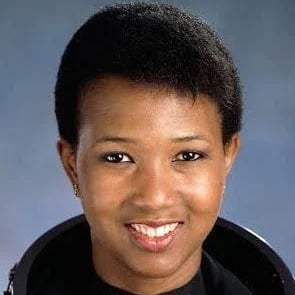 Mae Jemison (1956 – ) is an engineer, doctor, and astronaut born in Alabama. Raised in Chicago and educated at Stanford University and Cornell Medical School, she became the first African-American woman to go into space aboard the Space Shuttle Endeavour in 1992.
In addition, there are those African-American astronauts who came afterwards, including Winston Scott, Robert Curbeam, Michael Anderson, Stephanie Wilson, Joan Higginbotham, Alvin Drew, Leland Melvin, Robert Satcher, Jessica Watkins, and Jeanette Epps.
Grace Dell “Nichelle” Nichols (1932 – 2022), the actress, singer and dancer whose portrayal of Uhura in Star Trek and its film sequels was truly groundbreaking for Black actresses on American television. She should also be remembered for her work with NASA. From 1977 to 2015, she promoted NASA’s programs and helped recruit diverse astronauts, including Guion Bluford, Ronald McNair, and Charles Bolden.
To date, it is thought that some 18 African-American astronauts have made the journey to space (more if private space flights like SpaceX and Blue Origin are included). Given their undoubted importance, the National Museum of African-American History and Culture in Washington, D.C., has seen fit to honor “the many African American astronauts, engineers, technicians, and scientists who have contributed to sending humankind to the stars.”
With many of these ground-breaking men and women having been educated at HBCUs, it is undeniable that HBCU graduates have been instrumental to NASA’s aims and achievements right from the earliest days – be it West Virginia State, Hampton or North Carolina A&T, the latter two being particularly noted for their strong contributions to STEM and institutional ties to NASA.
That tradition continues to this day. Students from Morgan State University and North Carolina A&T are increasingly receiving the prestigious Astronaut Scholarship, highlighting the caliber of talent from these institutions. In 2019, Dr. Bernard Harris (the first African-American to walk in space) began funding through his Harris Institute, a new initiative that focused specifically on HBCUs. In 2023, North Carolina A&T became the first HBCU to have three students selected as NASA Astronaut Scholars in a single year.
Moreover, many Black astronauts continue to work as mentors to increase STEM representation within HBCUs. Aisha Bowe, a former NASA rocket scientist and STEM advocate who went into space on the Blue Origin mission in 2025, is now partnering with historically Black Winston-Salem State University’s Astrobotany Lab for a historic space experiment on microgravity research.
While NASA’s official motto is “For the Benefit of All,” the famous Latin adage “Per aspera ad astra” (literally “through hardships to the stars”) is doubly poignant for the many African-American mathematicians, engineers, scientists, and astronauts who have been integrally involved with space exploration and whose dreams to cross the final frontier for the benefit of humankind are now tangibly bearing fruit before our very eyes with the Artemis II mission.
Black excellence – and HBCUs – continue to play a pivotal role in humanity’s mission to reach for the stars and are proudly at the vanguard of the attempt to advance the human race’s understanding of our place in the universe.
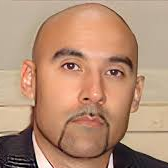 Lindsay Johns is a British writer and broadcaster of South African heritage. He studied modern languages at the University of Oxford and has been a (non-residential) Fellow at the Hutchins Center for African & African-American Research at Harvard University.
For more information, visit www.lindsayjohns.com

Hey JBHE,
Somebody needs to explain how in world can so-called Black America allow for a South African “Coloured” who resides in the UK to write about the great scientific contribution’s native-born Black Americans have made to space exploration. In fact, the SPINELESS, NEOLIBERAL, and POLITICALLY CORRECT UNCF should be duly ashamed for having Lindsay Johns as their “global correspondent” when you have scores of talented and skilled native-born Black American writers and journalists who have written on this topic. That said, the UNCF is still mired in an acute case of colorism akin to the NAACP, NUL, etc. with its public imagery even in 2026.
Moving forward, I would challenge Lindsay Johns write critically about the ongoing economic meltdown in South Africa, Declining infrastructural failures, Exorbitant unemployment rate, Anti-immigrant violence, Cost of Living Crisis, Excessive food insecurity, and definitely political corruption. Let’s not forget about the ongoing crisis in the UK that Lindsay Johns should easily write about how “Illegal Immigration is destroying the UK”, or Drug trafficking gangs and human smuggling.
In sum, no “Coloured” South African who resides in the UK should never be allowed to tell “the story” of native-born Black Americans.