

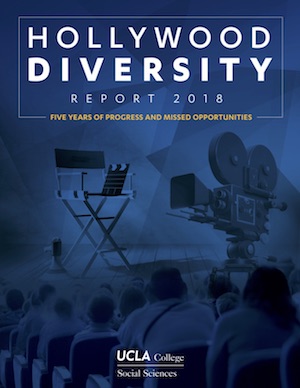
 The University of California, Los Angeles recently published its fifth annual Hollywood Diversity Report. The study looks at the casts of the top 200 theatrical releases of 2016 and 1,251 broadcast, cable and digital platform television shows from the 2015–16 season. The report also examined the racial gap in Hollywood behind the camera as well as how racial diversity in the cast related to success at the box office.
Black actors held 12.5 percent of film roles, 17 percent of roles in broadcast scripted shows and 13.3 percent of roles in cable scripted shows analyzed by the report — figures that are generally in line with the African-American population in the U.S. overall.
But, only 12.6 percent of film directors and 8.1 percent of the writers of these top films were people from underrepresented ethnic groups.
It has been a common belief in Hollywood that films with diverse casts won’t succeed in the increasingly important markets outside of the U.S. In 2016, the study found, U.S. films with the most diverse casts were released in fewer international markets than those with overwhelmingly White casts, despite the fact that the world’s population is as diverse as the United States. In 2016, the report found, films with casts made up of 21 to 30 percent minority actors enjoyed the highest median global box office ticket sales and the highest median return on investment. Films with the most racially homogenous casts were the poorest financial performers. The report also found that television shows with greater diversity typically get higher ratings and enjoy higher levels of social media engagement across all ethnic groups.
 Darnell Hunt, professor of sociology and dean of the Division of Social Sciences at UCLA and co-lead author of the report, stated that “we’re committed to examining diversity and gender disparity in Hollywood films and television shows and relating these findings to the bottom line of box office and ratings. In part, we hope this serves as tool for artists, producers, writers, directors and actors who are seeking funding and support for future projects that appropriately and creatively reflect the gender and ethnic diversity of the United States.”
Dr. Hunt is a graduate of the University of Southern California, where he majored in journalism. He earned an MBA at Georgetown University in Washington, D.C., and a master’s degree and a Ph.D. in sociology at UCLA.
A video on the subject of how cast diversity impacts box office receipts can be seen below.