

 A study led by researchers at the University of Maryland in College Park finds that African American men who have been exposed to a high degree of racism and/or discrimination tend to age faster than other Black men.
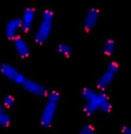
The study examined a biomarker of systemic aging known as leukocyte telomore length. Telomeres are repetitive sequences of DNA capping the ends of chromosomes. Shorter telomere length is associated with increased risk of death and chronic diseases.
Lead author David V. Chae, an assistant professor of epidemiology at the School of Public Health at the University of Maryland, stated, “We found that African American men who experienced great racial discrimination and who displayed a stronger bias against their own racial group had the shortest telomeres.”
Dr. Chae concludes that “Stop-and-frisk policies, and other forms of criminal profiling such as ‘driving or shopping while black’ are inherently stressful and have a real impact on the health of African Americans.”
The article, “Discrimination, Racial Bias, and Telomere Length in African-American Men,” was published in the American Journal of Preventive Medicine. To download the article, click here.