

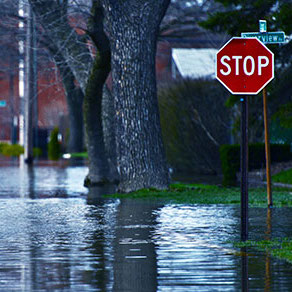
 Many studies have shown that African Americans are more likely than White Americans to live in areas that are close to highways, factories, and power plants that produce air pollutants, hazardous waste sites, and polluted waterways. A new study from scholars at the University of Arizona and the University of Kentucky finds that Black and Hispanic people and people with low incomes are more likely to live in areas at high risk of flooding from natural disasters than White and Asian people.
The researchers looked at four years of property sales data for nearly 50,000 homes in South Florida. The area has many properties prone to flooding. They also examined individual property sales data that included information on homebuyer ethnicity and income.
The key question from the data became: How much would somebody be willing or able to pay to avoid living in a high flood-risk zone? The answer was different depending on homebuyers’ ethnicities, researchers found. The study reports that White and Asian people with low incomes were willing or able to pay about $710 per year on average to avoid living in an area at high risk of flooding. Among Black people, that number was around $500.
The study also found that certain reforms to the federal government’s widely used flood insurance program could be disproportionately burdensome to the same groups of people.
The full study, “Sorting Over Flood Risk and Implications for Policy Reform,” appears in the November issue of the Journal of Environmental Economics and Management. It may be accessed here.