

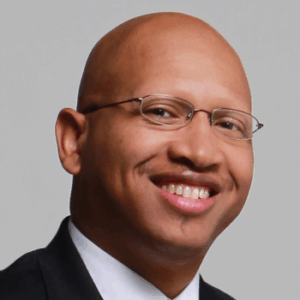
 Sacoby Wilson, professor in the School of Public Health at the University of Maryland, has won the 2025 Heinz Award in the environment category. Named for the late U.S. Senator John Heinz of Pennsylvania, the award is presented annually to six recipients making outstanding contributions to the arts, the economy, and the environment. Each recipient receives a $250,000 prize and the Heinz Award medallion.
As an environmental health scientist, Dr. Wilson has more than two decades of research experience in exposure science, environmental justice, water quality, air pollution, built environment, industrial animal production, and sustainability. Through his work with grassroots groups and community organizations, he confronts how industrial practices, pollution, and climate change disproportionately affect the health of people of color and residents of low-income neighborhoods.
At the University of Maryland, Dr. Wilson holds joint appointments in the department of global, environmental, and occupational health and the department of epidemiology and biostatistics. He also serves as the founding director of The Health, Environmental, and Economic Justice Lab.
Outside of academia, Dr. Wilson is the founder of the Center for Engagement, Environmental Justice, and Health INpowering Communities. Since its establishment in 2023, the nonprofit organization has become a national leader in addressing environmental inequities through advocacy, annual summits, education and training programs, and engagement with policymakers.
“Many communities distrust well-funded academic institutions, having endured decades of broken promises from researchers who fail to understand their lived experience,” said Dr. Wilson. “My work deploys science of the people, for the people, and by the people. It is built on trust, respect, transparency, and open communication, and uplifts the principle of representative justice. It’s about applied, action-oriented science for justice and social change.”
An HBCU alumnus, Dr. Wilson earned his bachelor’s degree in biology and ecotoxicology from Alabama A&M University. He holds a master’s degree in environmental health and a Ph.D. in environmental health sciences and engineering both from the University of North Carolina at Chapel Hill.