

 The Thurgood Marshall College Fund’s Dr. N. Joyce Payne Research Center has released a new report examining how historically Black colleges and universities are adopting, governing, and preparing for artificial intelligence across their institutions.
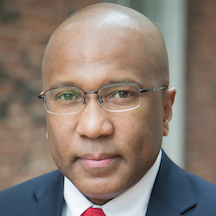 “Artificial intelligence is no longer a future consideration. It is a present reality shaping every sector of American life,” said Harry L. Williams, president and CEO of TMCF. “This report makes clear that HBCUs are ready. If America is serious about winning the future of AI, it must invest in the institutions that have always produced talent, innovation, and leadership for the nation.”
Although some 75 percent of surveyed leaders at TMCF member institutions reported using AI on a daily or weekly basis in early 2026, many of these colleges and universities operate without an institutional strategy for AI implementation. When asked directly what is holding their institutions back from fully adopting AI, HBCU leaders frequently reported barriers that are not direct technology problems. Among the survey respondents, 41 percent cited funding challenges, 32 percent cited concerns with staff capacity, and 27 percent reported a lack of sufficient campus infrastructure.
The TMCF report also revealed a gap between HBCU leaders’ confidence in AI’s current impact at their institutions and their belief in the technology’s potential benefits. Only 40 percent of respondents said they are confident that AI is currently delivering meaningful value at their institution today. Yet, 90 percent believe AI has the potential to support their institution’s mission, suggesting there is a major implementation support gap. Despite HBCUs’ general interest in adopting AI, 61 percent of surveyed institutions are at least somewhat concerned about the ethical risks of AI decision-making, specifically the technology’s biases and fairness and data privacy surrounding AI’s usage.
According to the report, HBCU students are already using AI extensively. Overall, surveyed leaders reported that students use AI more as a supplementary aid for assignments via brainstorming (47 percent) and editing (34 percent) rather than a tool to write large or small parts of their assignments for them (24 percent). Additionally, the majority of institutions provide students with access to institutionally supported AI tools and provide guidance on AI in classroom instruction. Among faculty, engagement with AI remains concentrated in learning and research, while staff are using AI primarily for productivity and administrative purposes.
However, only 29 percent of surveyed institutions have an institution-wide student AI policy, while only 16 percent have an AI policy for their faculty. While the majority of surveyed institutions (58 percent) say they use AI detection and plagiarism software on students’ assignments, 14 percent say they do not monitor their students’ use of AI.
Currently, only 21 percent of surveyed institutions have some existing practice of measuring AI literacy as a student outcome. Despite this lack of formal measurement, a staggering 81 percent of respondents indicate that they expect AI to be measured as a student outcome within the next three years.
 “This is not simply a report about technology. It is a report about American competitiveness, educational success and institutional advancement,” said M.C. Brown, executive director of the Payne Center. “HBCUs have long done more with less, producing a disproportionate share of the nation’s Black engineers, scientists, doctors, lawyers, military officers, entrepreneurs, educators, and public servants. In the age of AI, the question is whether the nation will once again ask HBCUs to carry national progress without national investment, or whether we will seize this moment as an institutional preparedness opportunity – an IPO for America’s future.”