

by Al-Tony Gilmore
As one generation gives way to the next, history often finds itself with a deficit in adequately recognizing some remarkable individuals who have made profound contributions to the shaping of the contours of American history. Those unsung individuals remain minimized or truant in mainstream history books and media, intellectual exchanges, and classroom lectures, and are subsequently diminished historically and forced to the sidelines of modern memory.
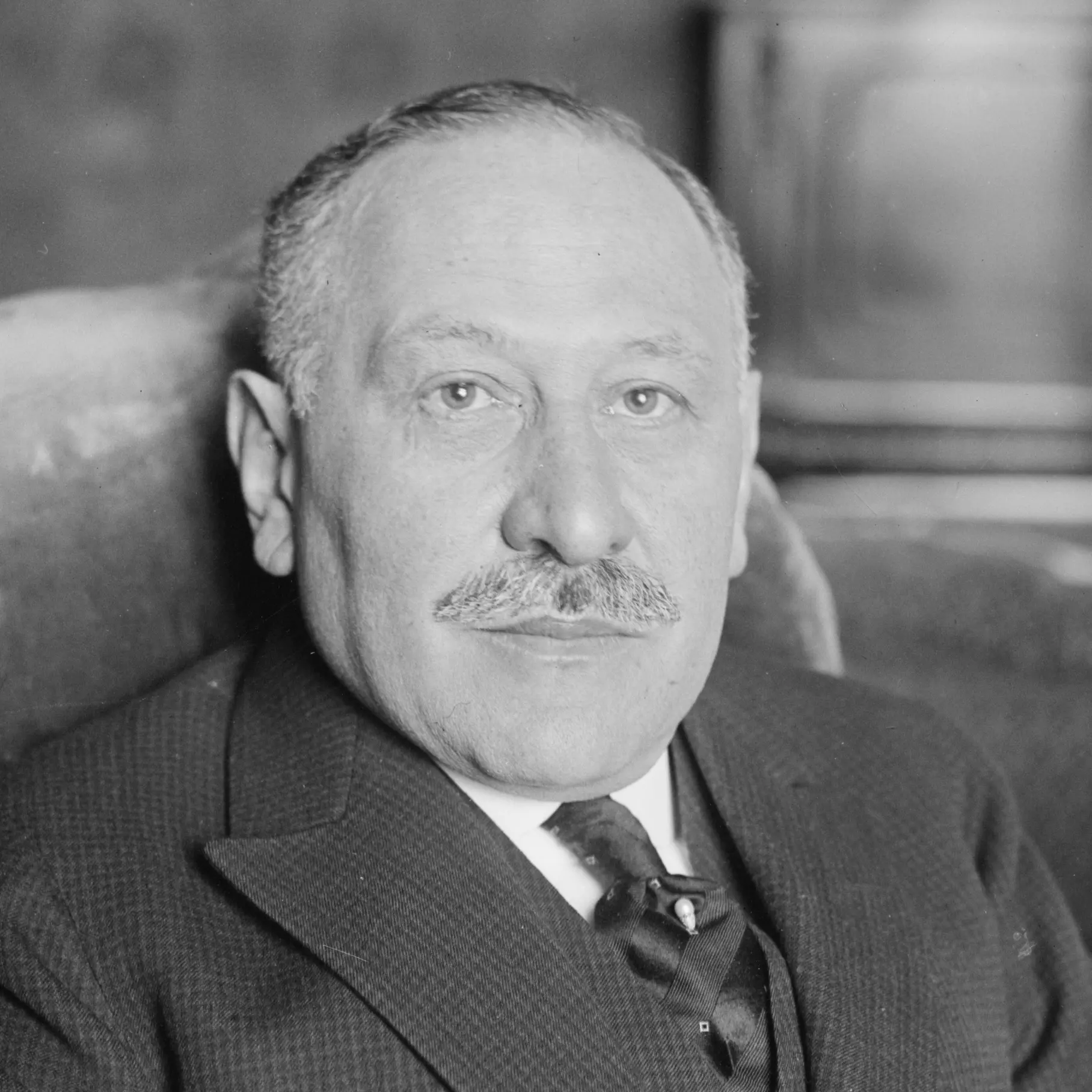
Julius Rosenwald, a wealthy Jewish businessman, president of Sears, Roebuck, once the world’s largest chain of department stores, and an innovative advocate for African Americans, is one such person who has inexplicably and indefensibly been reduced to a footnote in African American history and is worthy of an overdue resurrection.
The magnitude and consequential impacts of this son of mid-nineteenth century poor German-Jewish immigrants, and his initiatives for advancing Black education, culture, civic engagement, and civil rights in the first half of the twentieth century were vast and incalculable. Yet, his contributions have been largely unheralded because he subscribed to the tradition of his Jewish heritage – matan b’setter – which encouraged that the highest form of giving be anonymous.
Rosenwald was raised in Springfield, Illinois, in a house across the street from the home of Abraham Lincoln, whom he revered for his stance on slavery and for leading the Union to victory in the tumultuous Civil War. While he was not a prominent advocate for integration in the modern sense of the term, he believed in it and was a fierce and courageous advocate for laying the practical and incremental groundwork for progress towards that goal.
Rosenweld found the treatment of the freedmen in the violent anti-Black post-Reconstruction South and the oppressive conditions under which they were forced to live to be abominable. He saw nothing fair or equitable in the implementation of separate but equal in the Plessy v. Ferguson Supreme Court decision of 1896, especially in the allocation of public resources for the education of Black children, or in the extension of citizenship rights for Black people.
During his lifetime, no American citizen donated more of their personal wealth or experienced more success with the programs they initiated and the causes they championed for Blacks. His passion and resources were heavily invested in educational equity and racial justice, and were guided by the strength and simplicity of his philanthropic resolve “to try and cure things that seem wrong.”
Booker T. Washington is to be credited with soliciting the support of Rosenwald for social justice when he persuaded him to become a member of the board of trustees of Tuskegee Institute in 1912, a time when many Whites of power and influence solicited the advice and counsel of Washington more than any other Black person. Rosenwald had been moved by Washington’s 1901 autobiography, Up From Slavery, and prized his relationship with Washington – the most influential Black man of his era
On the national level, the impact of Washington’s emphasis and approach to basic and industrial education was rivaled and countered by W.E.B. Du Bois’ uncompromising campaign for Black political and social equality. Rosenwald did not see their differences as irreconcilable. He admired Du Bois for his intellectual brilliance and central role in the founding of the NAACP and the forward-looking movement for dignity and full equality which he represented.
Following the end of Reconstruction, programs to educate Black students throughout the South were either shamefully underfunded or willfully abandoned. In 1913, Washington approached Rosenwald, requesting modest funds for the construction of six schools in rural Alabama. Washington was well informed of the empathy of the self-made businessman for the oppressive conditions of Black life in the South. Rosenwald found personal satisfaction in helping those most in need, Jews and non-Jews, and nothing was more in need than public schools for Black children. Rosenwald was receptive to Washington’s request. “All the other pleasures in life seem to wear out,” he said, “but the pleasure of helping others in distress never does.”
Intrigued with Washington’s appeal, Rosenwald weighed in with financial support. Within a year, the pilot program so impressed Rosenwald that shortly after his first site visit, he decided to build more. And together with Washington, they developed a model whose buy-in funding scheme was implemented in every location where a school was built.
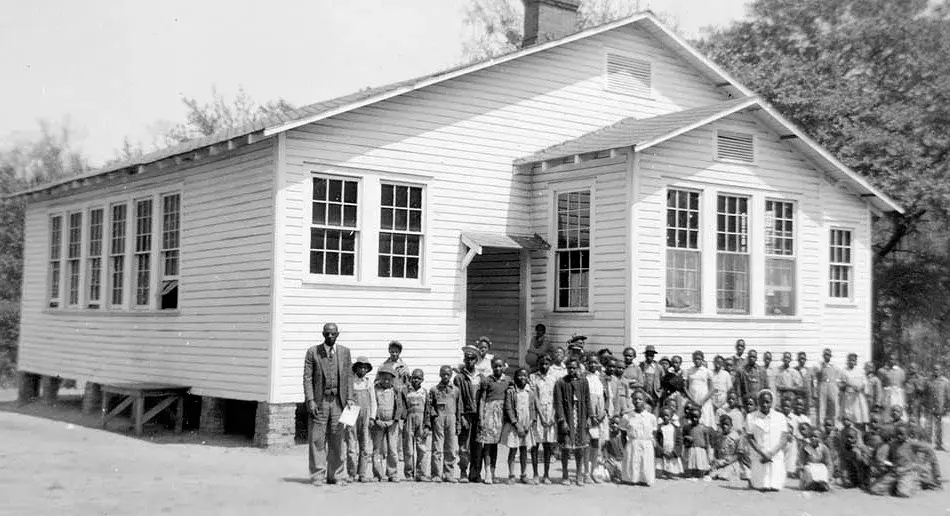
For the construction of each school – all at the personal expense of Rosenwald, there had to be collaborations of Black communities, White communities, and White governing bodies which would sustain funding for the maintenance and operation of the schools. Rosenwald also constructed hundreds of homes for Black teachers recruited to teach in those rural and often isolated environments.
From 1913 to 1932, Blacks raised more than $4.7 million to aid in construction, often donating both land and labor. This model resulted in the construction of close to 5,000 schools for Black children and several hundred homes for teachers in 11 states of the old Confederacy, as well as Oklahoma, Kentucky, Missouri and Maryland. During that period, approximately one-third of all Black students in the U.S. were educated in what were known as Rosenwald Schools.
The schools existed in places where no other public education either existed or was geographically accessible and – for most – the grim alternative to that formal education was no formal education. Sharing the same geographic and social landscape, the Rosenwald schools became pipelines to historically Black colleges and universities (HBCUs), building enrollments and helping bridge the wide educational gaps of the Jim Crow era.
Rosenwald also understood that school buildings without adequate educational materials would fall short in the quality of education they provided. Thus, as a corollary to those schools, he devised a program of partnerships with those communities for establishing libraries in either those schools or at other locations in those small communities. He realized that in those places illiteracy plagued Whites as well as Blacks, and with a clever ploy, he agreed to contribute funds for rural library construction and to supply them with book collections with one caveat: Blacks had to be granted equal access to those facilities and their services.
 It was a deal many communities could not resist, and in this instance, were willing to bend the rigid rules of segregation. Thousands of rural libraries were constructed by the Rosenwald Foundation. Aisha Johnson, of the Georgia Institute of Technology, maintains in her book, The African American Struggle for Library Equality (Rowman & Littlefield, 2015), some of these were the first semi-integrated libraries in the Jim Crow South.
Those facts alone are enough to calibrate the enormous consequential impact of the Rosenwald Schools and libraries on the lives of more than a generation of Blacks and rural southern Whites. Many of those schools and libraries operated until the late 1950s and early 1960s – well after the 1954 Brown v. Board of Education Supreme Court decision. If the sum of Rosenwald’s contributions to Black education totaled no more than those two accomplishments, he merits more historical recognition and memory than he has received. They are unmatched in scope and sweep by any other individual philanthropic effort in the South – before or since.
But the generosity of Julius Rosenwald was not limited to building schools for rural Blacks or libraries for those underserved communities. He was deeply passionate about doing more, and he did much more, beginning with the Rosenwald Fund, established in 1927, by providing fellowships and other contributions to young scholars, a large number of whom were Black and to White southern cultural figures. Stated with simplicity and economy of expression, the goal of the fund was for the “well-being of mankind.”
Unlike other endowed foundations such as Rockefeller, Carnegie, and Vanderbilt, the Rosenwald Fund was uniquely different in that it was not designed to fund itself in perpetuity. Instead, it deliberately prearranged to spend all of its funds until they were completely exhausted, and all was to be given away during Rosenwald’s lifetime or within 25 years after his death. In that period of time, the fund donated $70 million, the equivalent of almost $1 billion in 2026 dollars.
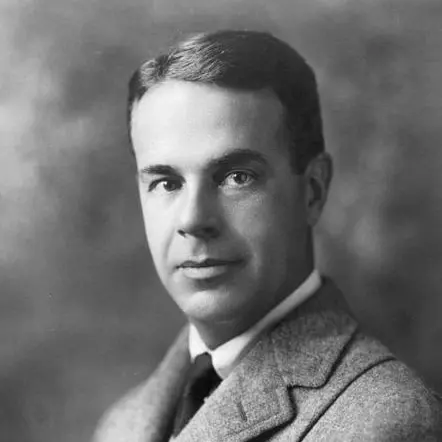
The hand-picked administrator for the fund was Edwin Embree, a vice president of the Rockefeller Foundation, whom Rosenwald first met when he served on its board. Both shared the same vision for social justice and championed the expansion of philanthropy into the humanities and social sciences. Embree served in that capacity from 1927 until 1948, when the fund closed. But in those two decades, the fund became the most prestigious and generous source of philanthropy for the Black academic, literary, and artistic generation preceding the modern civil rights movement.
Although the fund was not one dedicated exclusively to Blacks, it unapologetically welcomed their proposals and judged them solely on merit. The fund also selected a wide number of Blacks to serve on the committees charged with evaluating the award proposals.
The Rosenwald Fund fellowship awarded close to one thousand fellowships to Blacks – most of whom, because of segregation and racism, were scholars restricted to HBCUs at a time when the emphasis and expectations of faculty at those schools was decidedly more on teaching than research. Sabbatical leave and institutional funds for research for Black scholars at all but a few of the HBCUs were virtually nonexistent. Most of the best and brightest faculty at those schools held master’s degrees and before the Rosenwald Fund had few supportive sources of income for further graduate study. And the relatively small number who held doctoral degrees, no different than other faculty, were not exempt from heavy course loads and five-day teaching schedules, which allowed little time for pursuing their research interests.
It was a highly competitive fellowship program providing financial compensated breaks, research funding and travel opportunities for unusually promising and gifted scholars and recent college graduates, as well as intellectuals and artists.
Many of the grant recipients became some of the most well-known artists, writers, and cultural figures of the twentieth century. A small sampling of those names include Langston Hughes, James Weldon Johnson, Carter G. Woodson, Walter White, Claude McKay, Gwendolyn Brooks, Maya Angelou, Marian Anderson, Ralph Ellison, Richard Wright, Chester Himes, Zora Neale Hurston, Richmond Barthe, Katherine Dunham, Jacob Lawrence, Augusta Savage, Charles White, William Grant Still, and James Baldwin.
Largely because personalities from those fields have experienced wider exposure with the general public, they are generally better known to twenty-first-century audiences than the scores of brilliant Rosenwald HBCU scholars, artists, and civil rights leaders who matriculated, taught, and helped define the quality of education at their institutions.
Of course, there are higher profile HBCU exceptions whose contributions in their respective fields have been lasting and profound, including: W.E.B. Du Bois, John Hope Franklin, Benjamin Quarles, Margaret Walker, Ralph Bunche, Charles Drew, Rayford Logan, Sterling Brown, E. Franklin Frazier, Ernest E. Just, and Benjamin E. Mays.
On average, 50 fellowships were awarded each academic year and announced in The New York Times. While the historical records of the Rosenwald Fund Collection at Fisk University do not offer a fixed number of those who taught or studied exclusively at HBCUs, an examination of them indicates that nearly all of those institutions had faculty, administrators, or students who submitted formal applications for fellowships.
Each of those HBCU and Rosenwald luminaries – who represent only a sample of distinguished recipients – left indelible marks in their fields and at their institutions, and most have been the subject of continuing scholarly inquiry, including monographs, dissertations, articles, books, seminars, documentaries, film, and campus buildings and programs named in their honor. All remain legendary figures in the history and culture of their institutions and beyond. The sum of their contributions is incalculable. But it is eloquent testimony and indisputable evidence as to the exceptional quality of faculty some HBCUs were able to recruit and assemble – especially Howard University – during segregation when Black scholars found closed doors to faculty positions at PWIs. The exceptionally large number of Howard University recipients propelled the school’s widely known reputation as the “Capstone of Black Education” – a title noting its central position and high academic standing in Black higher education.
Before the 1940s, hiring of Black faculty at PWIs in any capacity, including adjunct, lecturers, and visiting scholars, was extremely rare and nonexistent for tenure-track positions. The NAACP, however, during the mid-to-late 1930s had begun to initiate and win court cases challenging segregation in higher education. These cases boosted the climate of optimism among Blacks and were the building blocks that led to Brown v. Board of Education.
Edwin Embree saw an opening in this flurry of progressive activity that would establish the Rosenwald Fund in alliance with the NAACP towards the new frontier of integration. Up to this point, the Fund had distributed its resources within the parameters of segregation, but Embree was driven to pursuing something different, something that would have both a broader impact on society and position the Rosenwald Fund as a leader in the vanguard of consequential social change.
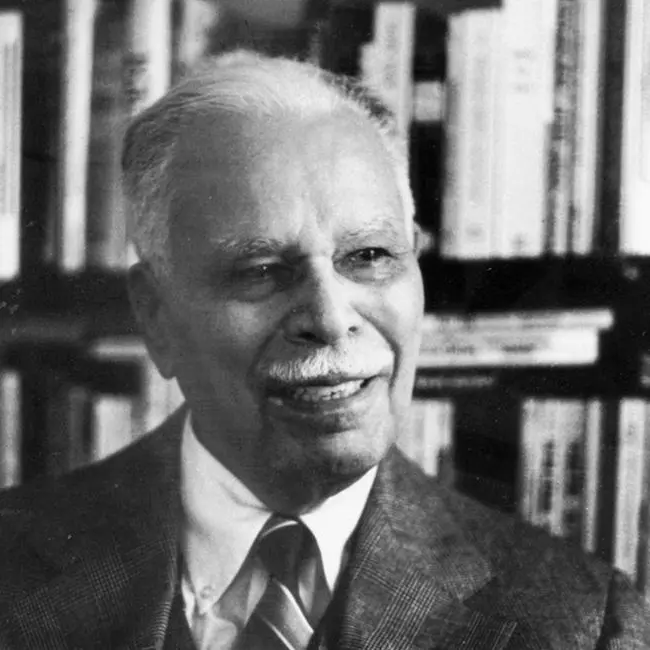
Embree took particular interest in Allison Davis of Dillard University, and twice a Rosenwald grant recipient, with whom he had developed a personal relationship and whose scholarship he admired. Davis was ideally suited to become the first Black to be hired as a tenure-track professor at a PWI. Embree was determined it had to be at a prestigious school, the University of Chicago. Dr. Davis had received his Ph.D. at the University of Chicago and had served as a lecturer. The faculty and administrators at the university had come to observe his brilliance and erudite comportment.
But there was no announcement of a vacant faculty position, so Embree, after consulting with Davis for approval, initiated a one-man campaign meeting with administrators, faculty, and trustee board members to consider hiring Davis. His efforts galvanized key outside support from renowned scholars such as Howard Odum of the University of North Carolina and that of first lady, Eleanor Roosevelt. But the effort had to overcome reservations and resistance within Chicago’s anthropology department. Embree countered with offering to pay Davis’ faculty salary for three years, which would give the university time to observe him more closely before considering him for tenure. Even that offer did not entice the anthropology department to accept the arrangement. Embree used Rosenwald funds to secure Davis a position in the education department, where in 1942 the barrier was broken. Davis became the first Black American to secure a tenure-track faculty position at a PWI.
Embree explained his philosophy of using the fund for promoting integration in higher education, saying: “The whole purpose of foundations is to bring about higher standards and wiser practices that would occur in the normal course of events. In some cases foundations start movements that might not get started at all. In all cases they hasten these movements.”
Shortly after the three-year evaluation period, Davis effectively transitioned to become a permanent professor, and the University of Chicago then assumed the obligations of his salary. He made his mark pioneering interdisciplinary scholarship and examinations of cultural biases in intelligence tests, compensatory education, and southern race, caste and class, along with the volume of grants he was awarded and academic recognitions he received. All of this combined to solidify his stature as one of the nation’s premier scholars whose work bridged the fields of education, sociology, and anthropology.
What Embree and the Rosenwald Fund had accomplished with its social engineering initiative for placing Davis on the University of Chicago faculty sparked the beginning of a quiet but notable shift of race inclusion in American higher education. No longer would Black scholars be confined and limited to teaching at HBCUs.
Of those early scholars who joined the faculties of PWIs in the 1940’s – a time when Black educators held only 0.18 percent of teaching positions at PWIs – a high percentage had Rosenwald affiliations on their resumes.
In 1947, Abraham Harris, an economist, left Howard University to become the first Black tenured faculty member of the department of economics at the University of Chicago. That same year, William Ming Jr. was appointed at the University of Chicago’s Law School. Four other noteworthy scholars hired in the 1940s were J. Saunders Redding at Brown University; Adelaide Cromwell at Hunter College in New York and Smith College in Massachusetts, William Thomas Fontaine at the University of Pennsylvania; and William Augustus Hinton at Harvard Medical School.
Over the next decade, the campaign initiated by Embree and the Rosenwald Fund would find traction as other PWIs – especially in the Midwest and Northeast. All were former Rosenwald Fellows and that single distinction served as a clearinghouse for excellence that elite PWIs understood and valued. These professors would be the first exposure of most White college students to Blacks in positions of academic authority and the rich lineage of intellectual agency within the Black community.
They also provided assistance in dispelling deeply ingrained feelings of Black intellectual inferiority. Many, if not most, White faculty and administrators at those schools were also enlightened on race through interactions with their accomplished new colleagues. It would be more than a score of years before PWIs would move beyond token appointments of Black faculty in higher education, but the beginning of the movement can be traced to the Rosenwald Fund and Allison Davis.
Aside from the support provided to HBCU scholars, the Rosenwald Fund extended the arm of its philanthropy to the institutions themselves. When Frederick Patterson, president of Tuskegee Institute, developed the idea of consolidating the fundraising resources of HBCUs into a single entity, his initiative required capital at a time when the Great Depression and wartime shortages had adversely affected charitable donations. The Julius Rosenwald Fund responded to the novel concept with a launching grant, becoming one of the founding philanthropic anchors of the United Negro College Fund in 1944.
William Trent, a graduate of University of Pennsylvania’s Wharton School, was chosen as the first executive director of UNCF. He, too, had been a recipient of a Rosenwald grant.
The faith that Rosenwald had in the academic programs of some HBCUs and the relationships he fostered with their presidents and board members led him to support infrastructure initiatives at Tuskegee Institute, Howard University, Atlanta University, Dillard University, Morehouse College, and Fisk University, which now houses on its campus the extensive archives of the Rosenwald Fund Collection. HBCUs such as Elizabeth City State University, Jackson State University, Spelman College, and Meharry Medical College, among others, were recipients of support from Rosenwald for institutional development.
Throughout the existence of the Rosenwald Fund most of its generosity was ostensibly confined within the boundaries of “separate but equal,” though it played a foundational role in striking down de jure segregation in the Brown v. Board of Education decision. Paradoxically, the research and expertise of scholars it funded during the Jim Crow era, who worked under rigid segregated circumstances, all became intellectual capital for Thurgood Marshall in the preparing and filing of his briefs for integration. Additionally, the fund had supplied financial backing for the early state-by-state lawsuits of the 1930s and 1940s that established legal precedents and sustained momentum for NAACP litigation. According to Philanthropy Roundtable, the fund contributed a third of the litigation costs directly associated with the Brown case.
Rosenwald had a long and productive history with the NAACP, providing critical financial support for operating expenses in its formative years, serving on the board of its Chicago chapter, and hosting early meetings at Chicago’s Temple Sinai.
Rosenwald also contributed financially to the Association for the Study of African American Life and History (ASALH), and served on its board. The organization officially founded in 1915 in the black Wabash Avenue YMCA of Chicago, a building he constructed in 1913 because YMCAs across the nation were segregated. He funded the creation of 27 other purpose-built Black YMCAs with a matching grant model –similar to that used with the Rosenwald Schools – by offering $25,000 matching grants to any American community that could raise $75,000 locally. During segregation these Black YMCAs became vital community hubs, cultural safe havens, social centers, lodging spaces and recreation facilities for urban Black populations. Few of the original buildings still survive.
It is ironic that the Brown decision was the beginning of the dismantling of the Rosenwald Schools, which over the next two decades would virtually disappear from the American landscape resulting from neglect, consolidation, deterioration, and demolition.
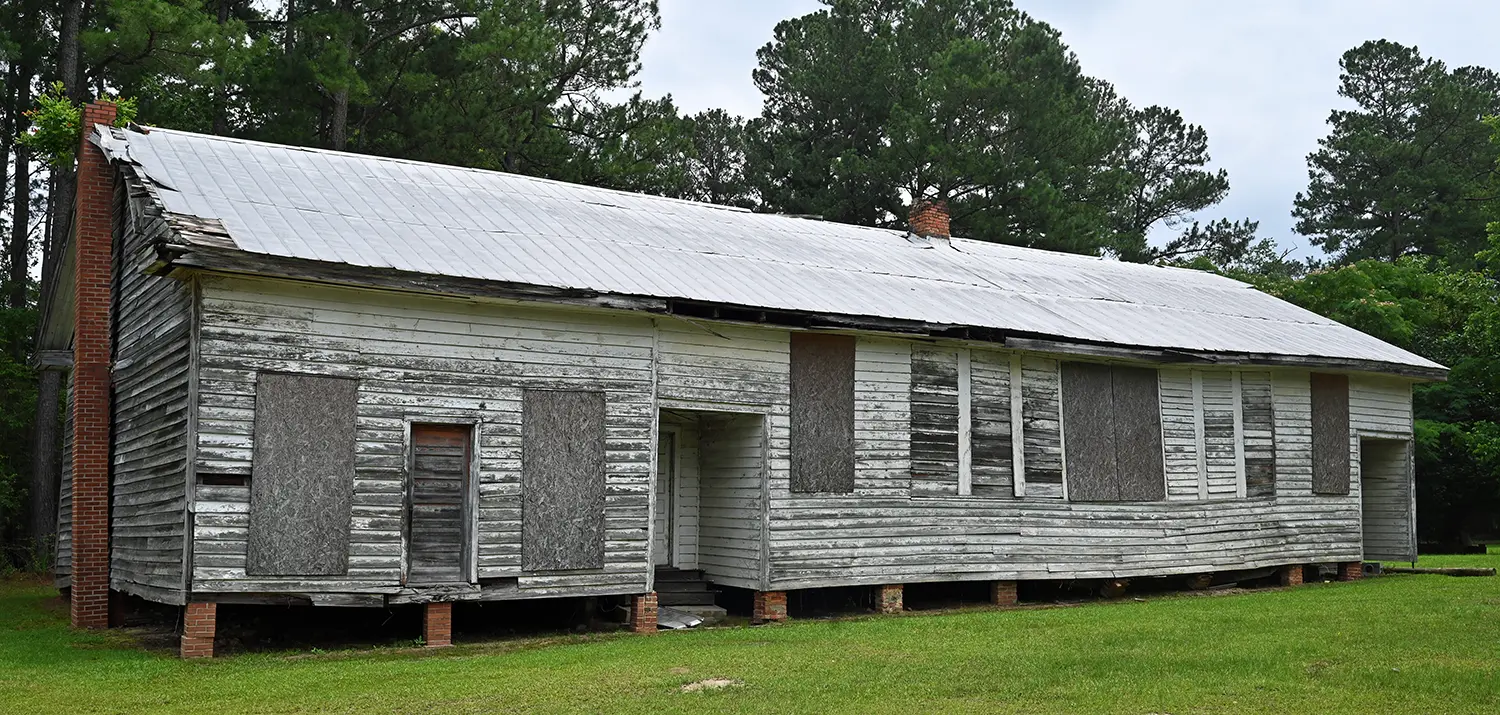
Photo credit: Jud McCranie, CC BY-SA 4.0, via Wikimedia Commons
This has caused rural amnesia, a sociological concept that describes the loss or erasure of a community’s collective history and identity. While it is not a medical condition, the concept uses “amnesia” metaphorically to explain how the loss of geographical spaces and the migration of the people who once occupied those spaces contribute to them being forgotten. And while the majority of students who matriculated in those schools eventually migrated to urban areas throughout America, the memories of those buildings that migrated with them were not memories in the larger context of the Rosenwald Schools. They would be memories of their individual schools and the teachers and administrators who occupied those spaces.
A few hundred of the buildings survive today, and have been named endangered historic places, many in advanced stages of disrepair, and a small number have been restored and repurposed as vibrant community and learning centers. The National Trust for Historic Preservation has placed the surviving Rosenwald Schools on its list of most endangered historic places.

Photo credit: Brian J. Daugherity, Alyce Miller, and Christopher Silvent, CC BY-NC-SA 4.0, via Virginia Commonwealth University Libraries
While he is best remembered for the Black rural schools he pioneered, rarely were any of the schools named for Rosenwald or did his name appear on the signage. In fact, he aggressively insisted they not be named in his honor and resisted all efforts to the contrary, believing that placing his name on any of the buildings would counter the pride, dignity and sense of ownership he felt should reside with the local communities who were partners in the funding and responsible for continuing support of the schools.
Most of the schools were named for their geographical locations, local churches, respected Black members of the community or uplifting terms like Friendship, Hope, Harmony and Faith. This stood in stark contrast to wealthy industrial philanthropists such as John D. Rockefeller and Andrew Carnegie, who either encouraged or predetermined that their names be inscribed on the libraries and college buildings that were constructed with their funding.
Rosenwald had an aversion to those displays of vanity by his wealthy peers and particularly to their perpetual endowments, which he felt were destined to bureaucracy and born of a desire to control the future long after their demise. He had a quiet and firm humility toward wealth, while embracing a radically different view of endowments, which had led him to the mandate of a 25-year sunset on the foundation he created. He also distanced himself from his peers regarding the nature of their wealth accumulation with soul-searching honesty. He rejected the social Darwinist idea that the most affluent and powerful were inherently superior or wiser than the poor and powerless. “Do not be fooled,” he once said, “into believing that because a man is rich, he is necessarily smart. I always believe most large fortunes are made by men of mediocre ability who tumbled into a lucky opportunity.”
Rosenwald did not equate the amassing of wealth with genius. He attributed it more to good fortune. But he was not hesitant in conceding the enormous power of money while cautioning that accumulating too much of it becomes “a vice.” Those seriously held beliefs reflect both his worldview and the strength of his character. On the whole, they also assist in explaining the relative anonymity of his name and legacy when compared with those of his more self-promoting philanthropic contemporaries.
It would be years after his death that the 15-state geographical range of the schools would become known by the group nomenclature of Rosenwald Schools. Thus, Rosenwald’s sense of humility and comfortability with anonymity became self-inflicting wounds to his legacy and must assume some responsibility for his contributions not being more celebrated.
But in lieu of the branding of his name, he made an exception in the advertising of his contributions to the wealthy class. He hoped to incentivize his peers and other captains of industry to follow his lead by addressing Black education, civil rights, and equal opportunity, all of which, in his estimation, had been disregarded or neglected by most of the captains of America’s industry. His desire was that his high-profile support of those causes would add institutional credibility to them and challenge others to match his stakes. Carnegie and Rockefeller, both through their own initiatives, awarded millions of dollars for Black education – all well within the framework of segregation. There is no evidence to suggest that Rosenwald experienced success in influencing others to adopt his models or concepts of giving. But both Carnegie and Rockefeller and others who gave substantially less to Black causes have stronger and more lasting name recognition than Rosenwald.
 Rosenwald’s name and legacy has experienced a modest boost in the twenty-first century, beginning in 2015 with the critically acclaimed documentary, Rosenwald: The Remarkable Story of a Jewish Partnership with African American Communities, directed by Aviva Kempner. This visually stunning and mesmerizing film introduced generations of Americans to Rosenwald, who had all but vanished from the lexicon of great Americans.
In 2026, the National Museum of African American History and Culture unveiled a permanent exhibition on the Rosenwald Schools. A bill has been introduced in Congress which seeks to preserve many of the remaining Rosenwald Schools.
In retrospect, it is difficult to refute that the Rosenwald Schools were the most transformative development in the public education of African Americans of the twentieth century, or that those schools and Rosenwald are not as well known as they should be, and have not been properly credited for saving much of America from itself.
But any full appreciation of Rosenwald will fall short if it fails to recognize him and the Rosenwald Fund for the body of contributions made in so many other areas of American life: establishing Black YMCAs in major cities throughout America; giving critical early support and involvement with the NAACP, Urban League, ASALH, HBCUs, and the funding of exceptional Black scholars; helping launch and sustain the careers of Black artists, writers, and other cultural figures; initiating the movement in higher education for the racial integration of faculties at PWIs; establishing equal access public libraries in hundreds of rural South communities; and supporting the social science, history and legal scholarship required for the decision rendered in Brown v. Board of Education.
The fingerprints of Julius Rosenwald and the Rosenwald Fund are all over this largely hidden history and must rise to a higher and more prominent level of visibility. Rosenwald was less concerned about building a legacy for himself than he was about building capacity for others. Rosenwald’s fidelity to his Jewish tradition of anonymity with giving – matan b’seter – must be respected, but those of us who are not bound to that tradition must be faithful, firm, and forceful with an obligation to record for posterity the whole of his immense contributions. To remember is to resurrect.
 Dr. Al-Tony Gilmore, a frequent contributor to JBHE, researches and writes widely on the intersection of sports and society. He is the Distinguished Historian Emeritus of the National Education Association and has served as a history professor at Howard University, University of Maryland, College Park, and as a visiting scholar at George Washington University in the Estelle and Melvin Gelman Graduate Research Center. He is the author of several books including: Bad Nigger: The National Impact of Jack Johnson (Kennikat Press, 1975); Revisiting The Slave Community (Greenwood, 1978); All The People: NEA’s Legacy of Inclusion (National Education Association, 2008); The Presidents and Executive Directors of the NEA and ATA: A Biographical Directory (National Education Association, 2011); and A More Perfect Union: The Merger of the South Carolina Education Association and the Palmetto Education Association (National Education Association, 2017). His articles, reviews and commentary have appeared in The New York Times, Washington Post, Huffington Post, New Republic, Commentary, American Scholar, Crisis, American Historical Review, Journal of Negro Education, South Atlantic Quarterly, Phylon, Journal of African American History, Journal of Sports History, The Black Commmentator and the Journal of Popular Culture, among other publications. He was curator for the widely acclaimed exhibit on Voter Suppression in America which appeared at the Maltz Jewish Museum in Cleveland, Ohio, and at the Skirball Museum in Los Angeles. He established the Al-Tony Gilmore Endowed Scholarship at North Carolina Central University, where a conference room has been named in his honor.