

Here is this week’s news of grants or gifts to historically Black colleges and universities or for programs of particular interest to African Americans in higher education.
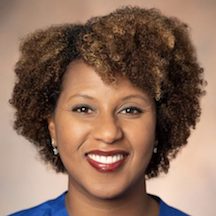 Renã Robinson, the Dorothy Wingfield Phillips Chancellor’s Faculty Fellow and professor of chemistry at Vanderbilt University in Nashville, received a $2,040,000 grant from the National Institutes of Health to start a program that will help underrepresented minority faculty further their success in STEM. The program aims to support underrepresented minority faculty members at predominantly White institutions and provide them with the tools and resources needed to be successful biomedical scientific leaders. The programming will explore how to cope with race-related stress, avoid burnout, set boundaries, and more. The initiative also will provide training in publications and grant writing to increase NIH grant submissions and awards to underrepresented minority faculty. Professor Robinson joined the faculty at Vanderbilt University in 2017 after teaching at the University of Pittsburgh. A graduate of the University of Louisville, Dr. Robinson holds a Ph.D. in analytical chemistry from Indiana University.
Alverno College in Milwaukee has been awarded a five-year, $2,890,000 grant from the U.S. Department of Education for programs to increase the number of highly trained, bilingual, and racially and ethnically diverse school-based mental health professionals. “There is a need for school psychologists who represent the communities they serve, especially in Milwaukee,” said Jessica Willenbrink, an assistant professor in the educational specialist training program for school psychologists at Alverno and the project director. “There are significant financial and scheduling barriers to complete a school psychology program, especially for underrepresented racial and ethnic minority groups. Through this grant, we will be able to offer students scholarships, provide mentorship, and place them in a job in a high-needs school district. We hope that this, in combination with our flexible hybrid program that offers all courses on the weekend, breaks barriers that individuals from underrepresented groups face.”
Historically Black Bowie State University in Maryland received a $2.1 million grant from the National Science Foundation for programs to increase the number and diversity of individuals entering the cybersecurity workforce. The Cyber Scholarship for Service Program at Bowie State will recruit, educate, mentor, and train three computer science majors and two transfer students from community colleges each year over five years. In addition, the undergraduate students will be engaged in research while enhancing their technical skills in critical information infrastructure protection.
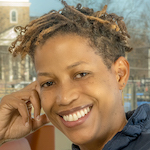 Morgan State University, the historically Black educational institution in Maryland, has received a $500,000 grant from the Andrew W. Mellon Foundation to launch Black Queer Everything (BQE), a pioneering initiative that seeks to enrich the discourse of race and racialization nationwide with a specialized focus on the interplay of racialized blackness in the LGBTQ+ community. The goal of the program is to develop innovative research opportunities, humanities-centered collaborative projects, and transformative teaching and curricula to provide meaningful experiences, training, and mentorship opportunities to the next generation of scholar-activists in Black queer studies. The program is under the direction of Anika Simpson, an associate professor in the department of philosophy and religious studies at the university. Dr. Simpson is a graduate of Spelman College in Atlanta, where she majored in philosophy. She holds a master’s degree in elementary education from Ohio State University and a Ph.D. in philosophy from the University of Memphis.