

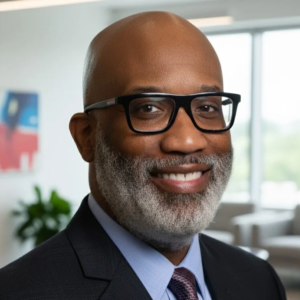
 Tony Brown, distinguished professor of sociology at Rice University in Houston, is the lead author of a new study examining how Black Americans view race relations in the United States. Dr. Brown’s research provides insights into the prevalence and predictors of “racial realism,” an ideological stance and mindset that describes racism as a lasting feature of American life.
With his co-authors from Rice University and Brown University, Dr. Brown reviewed data from the 2008-2009 National Annenberg Election Survey during the election of former President Barack Obama, a milestone that many Americans of all races interpreted as a decline in White supremacy. Roughly one-third of Black adults in the survey fit the profile of a “racial realist,” meaning they maintained the same negative view of race relations both before and after Obama’s first election in 2008. These survey respondents were more likely to report awareness of negative racial stereotypes, express strong support for racial and economic advancement, and have a deep sense of “linked fate,” the belief that what happens to other Black Americans directly impacts their own lives.
“Understanding how people interpret both progress and setbacks helps us see not only where we’ve been but also how they’re finding ways to thrive in the present,” said Dr. Brown. “This project is about listening to the full range of perspectives within the Black community. By capturing those different outlooks, we can build a more complete and accurate picture of race relations in the United States.”
According to the authors, their study highlights that political milestones alone are not enough to shift public opinion and that future research on race in the United States must consider the diversity of perspectives within the Black community.
“Research on race relations often focuses on White Americans’ attitudes,” said Dr. Brown. “This study shows the importance of also centering and comparing a variety of Black perspectives.”
An HBCU graduate, Dr. Brown earned his bachelor’s degree in sociology from the University of Maryland Eastern Shore. He received his master’s degree and Ph.D. in sociology at the University of Michigan. At Rice, Dr. Brown serves as deputy director of the Institute for Health Resilience and Innovation, director of the Racism and Racial Experiences Workgroup, and director of STaRT@Rice, a program that introduces students to academic research.

Hey Dr. Brown,
Your study is definitely flawed from the onset by asserting that Black adults “maintained the same negative view of race relations both before and after Obama’s first election in 2008.” For starters the rabid neoliberal, corporatist, and war mongering B.H. Obama did nothing for the collective native born Black American community from a policy standpoint. In fact. “No good” Obama did more for the “illegal immigrant and LGBT community” than he did for his staunchest supporters, native born Black Americans. As such, this shouldn’t be described as having a negative view on race relations but simply as “making an ACCURATE ASSESSMENT of their daily racial reality in the country”. In other words, spare us with the politically correct, ambiguous, and palatable phraseology such “racial realism”.
You and your coauthors should ask yourself why even associate such a term with native born Black Americans when they have been historically and currently on the receiving end of American racism. Further, your 30 percent estimate on Black adults as being “racial realist” is a misnomer on numerous levels. In fact, you and coauthors should have said 70 percent of Black adults are politically and historically unaware or refuse to make an “ACCURATE ASSESSMENT” of their daily racial reality in this country. Also, for those who dissent about my comment on Obama, need to realize that he was nothing but pure political symbolism and woefully lacking substantively for Black America.
Finally, so-called Black academics need to stop relinquishing their intellectual power in order to be accepted by White led academic journals and their White, Asian, and Latino peers. Write critically and honestly. It’s 2026!
Looking forward to reading the full study and thank you for your ongoing work to better understand the dynamics of race, racism and racial politics, areas of study that continue to reveal the challenges of life in this country.
Hey Joseph,
Your politically correct response is repulsive. In fact, your comment sounds like you’re from a Third World African or Caribbean country. For someone at your age residing in the US and not have a full understanding of RACISM in America is very unfortunate on numerous levels.
I’m appreciating your responses.
Hey Eric,
Your misguided comment is indicative of years miseducation. Individuals like yourself are totally oblivious or simply in sheer denial about the deep-seated daily realities of AMERICAN White racism. By the way, what African or Caribbean Third World country do you claim?
Sorry I missed your comment and didn’t reply sooner. I’m just an everyday black man who was blessed to have been able to meet both my paternal grandparents and both of my maternal grandparents. This means I was trained by my elders to think for myself even if it means standing alone; that’s why I overcame every obstacle and never allowed the echo chamber to distract me from my single mindedness-SUCCESS- no matter the situation. I probably sound like an American New Yorker. Go New York Go New York Go!
If one can not be helpful in enhancing understanding or adding something positive to the discussion, it might be better if one did not comment, lest one reveals something that is not so positive about one’s self.