

by S. Keith Hargrove
 The month of May was symbolic for numerous graduation and commencement ceremonies in higher education. It represents the pinnacle of the college experience for more than 4 million students annually receiving bachelor’s, associate’s, graduate, and professional degrees in the United States.
To participate in the commencement, every student has completed and fulfilled all the academic requirements to obtain their respective degree, thus graduating. However, it is the commencement ceremony at colleges that is a long-standing tradition unique to each institution, whereby family, guests, and thousands of others witness the formal and ritualistic protocol of the degree recognition and award.
Most commencement exercises follow a standard protocol that adheres to a tradition of pomp & circumstance and historical procedures from centuries of accepted higher education etiquette and decorum, widely infused in the academic achievement of students and confirmed and approved by the institution and the faculty.
The execution perspective of the program however may vary by the participants (students), the institution (faculty and administrators), and the guests (families and attendees). What is truly unique about every commencement event is the speaker, graduate attire, faculty acknowledgment with regalia, programmed events, excitement and demonstration of guests and families, and, in many cases, the celebratory display of graduates for their academic achievement.
At many of our historically Black colleges and universities (HBCUs), we have seen our graduates display their enthusiasm on stage, and/or the student seating audience area through Greek strolling and other dancing rituals as an expression of cultural celebration. One can argue that this freedom of expression should not be allowed or have limitations regarding their location and timeliness throughout the commencement ceremony.
In some cases, the leadership of the institution may fully support the expression by either participating or condoning the demonstration by the graduates or strongly restricting any kind of display. The real challenge I believe, if permissible, is how does the event integrate or merge cultural celebration with the traditional exercise of academic procession for conferring degrees and maintaining the dignity of both to represent future professionals entering the workforce, attract donors and maintain the reputation of the university.
And if restricted, what are the consequences of disobedience if a graduate chooses to do so. As an administrator, I offer three recommendations for our HBCUs to strongly review and consider in the planning and implementation of the commencement exercise.
First, I believe the purpose of the ceremony should be the priority regarding the academic processional activities of conferring degrees and adhere to the standard traditions of processes that support accreditation and the matriculation exercise of every degree granted and awarded. This includes reviewing all the requirements to meet degree attainment and how it is represented in the commencement ceremony by attire, announcement, documentation, and verbal recognition by the graduation audience via visual screen and/or name calling.
Second, provide a controlled period of cultural and personal celebration that does not deter and distract from the actual award distribution. This should typically occur after the degree is awarded and not within the vicinity of the stage platform where the degree is given and recognized. In other words, provide an alternative off-stage location with a designated time of display agreed upon by all graduates prior to the ceremony, and the opportunity for each student to individually celebrate with safety/security and according to agreed performance guidelines. Of course, the option of not allowing any expression is an alternative as well.
Third, provide a collective opportunity for all graduates to display celebration for a designated time, but within constraints so as not to represent the disorderly chaos of a party, diminish the essence of the commencement, and reflect the integrity and professionalism of the graduates through an orderly display of cultural celebration.
Yes, these suggestions are all controversial. That’s the purpose of this article, to stimulate discussion and to find a viable solution. Of course, every institution and its leadership set the guidelines of their commencement with its own traditional and flexibility in graduate celebration and expression. Yet, the objective is to maintain the sanctity and formality of the commencement ceremony while celebrating the ultimate educational achievement. Determining the limits of the intersection is controversial and a challenge for any university and its leadership. I suspect this will continue to be an ongoing contest for years to come as the desire to celebrate and freedom of expression confronts traditional academic pageantry.
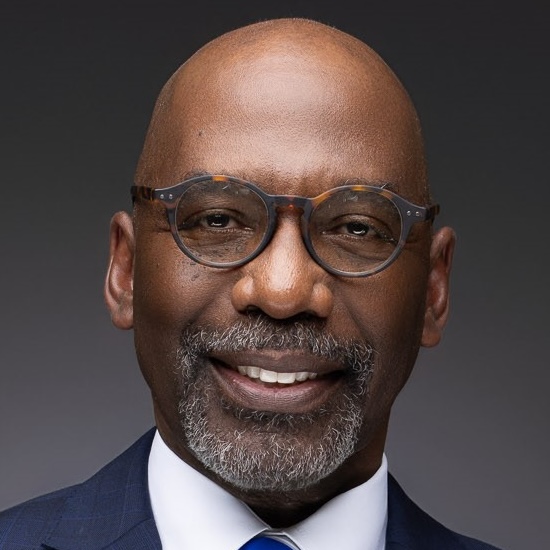 S. Keith Hargrove currently serves as chancellor at Elizabeth City State University in North Carolina. He previously served as provost at Tuskegee University in Alabama and as dean of the College of Engineering at Tennessee State University. Dr. Hargrove received his bachelor’s degree in mechanical engineering from Tennessee State University, a master’s degree from Missouri University of Science & Technology, and a Ph.D. from the University of Iowa. He completed the HBCU Executive Leadership Institute at Clark Atlanta and the Higher Education Leadership Foundation (HELF) program.