

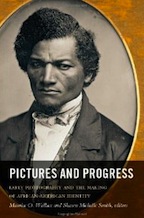
 A new book edited by Maurice Wallace, associate professor of English and African and African American studies at Duke University and Shawn Michelle Smith, an associate professor at the School of the Art Institute of Chicago, examines the impact of early photography on African Americans. The book, Pictures and Progress: Early Photography and the Making of African American Identity (Duke University Press, 2012), offers a collection of essays on how Frederick Douglass, Ida B. Welles, W.E.B. Du Bois and other notable African Americans viewed photography as a means to counter racial prejudice and stereotypes.
“Fredrick Douglass was very hopeful and optimistic about photography,” says Professor Wallace. “He thought it would change everything as far as black life in the United States. He imagined that pictures would yield a social, political, and cultural progress, not just for African-Americans but for the nation as a whole.”
Professor Wallace stated that “early photography helped the U.S. visualize the possibility of African-Americans as proper and fully engaged citizens in our democracy; a representation that was every bit as dignified and deserving as any White American family portrait.”
But the book also makes the point that photographs of lynchings were used as a way to terrorize Black Americans and to make them think twice about challenging the rules of Jim Crow.
Here is a video about the book prepared by Thomas Leak and Gabriel Aikens, students at North Carolina Central University who are spending the summer as interns at the Duke University Office of News and Communications.