

Here is this week’s news of grants or gifts to historically Black colleges and universities or for programs of particular interest to African Americans in higher education.
 The University of Maryland received a $790,000 grant from the Andrew W. Mellon Foundation that will fund the creation of a new sculpture at the University of Maryland’s David C. Driskell Center. The grant will also fund the identification, cataloging, preservation, and digitization of prominent archives in the field of African American art. The sculpture commemorating Driskell, a legendary artist, art historian, and distinguished university professor emeritus who died in 2020, will be created by well-known African American artist Melvin Edwards, a longtime friend of Professor Driskell. The grant will support a full-time archivist position and a graduate student and other expenses to inventory, catalog, and digitize the 75 linear feet of materials from the Dr. Tritobia Hayes-Benjamin Archive, estimated to contain some 20,000-25,000 items. Dr. Hayes-Benjamin (1944-2014), who was Professor Driskell’s first Ph.D. student in art history, went on to serve as professor of art history, associate dean of the College of Fine Arts, and director of the Howard University Gallery of Art.
Central State University, a historically Black educational institution in Wilberforce, Ohio, was awarded a three-year, $250,000 grant from the National Institute of Food and Agriculture to increase health/economic viability with the creation of incubator farms and farmers’ markets within underserved communities. The program will empower new farmers through training at incubator farms to establish their own farming operation; develop a curriculum for training farmers at incubator farms within underserved and underrepresented communities; improve community health through access and knowledge of incorporating fruits and vegetables into the diet, and encourage minorities to choose agriculture as a career.
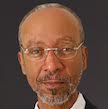 Historically Black North Carolina Central University in Durham received a $148,817 grant from the American Council of Learned Societies to document the history of the Bragtown community in Durham. The funding will be used to complete the identification and transcription of deeds in Durham, Wake, and Orange Counties and to produce a digital exhibit and mural located in the heart of Bragtown, which was established in the late 1800s north of downtown Durham. The project is under the direction of Charles Denton Johnson, an assistant professor of history at the university.
Florida International University in Miami received a $250,000 grant from the U.S. Department of Energy for a program to increase the number of women and members of underrepresented racial and ethnic groups pursuing degrees in physics. Selected students will work closely with the university’s nuclear physics group, receiving mentorship, training support in both experimental and theoretical nuclear physics, and hands-on research experiences. They will also have the opportunity to attend conferences, as well as participate in summer programs at the Thomas Jefferson National Accelerator Facility.
Duke University in Durham, North Carolina, received a grant from the National Endowment for the Humanities to launch a project to provide expanded digital access to the Behind the Veil: Documenting African-American Life in the Jim Crow South oral history collection, housed in the David M. Rubenstein Rare Book & Manuscript Libraries at the university. The BTV collection – gathered in the years 1992 to 1995 – encompasses a number of formats including over 1,200 taped audio cassette interviews and 3,000 photographic strips, slides and prints, manuscript project files, training materials, administrative records, and born-digital files. The grant work will focus on the digitization and transcription of the oral histories, scanning of the photographic materials, and sharing the collection’s contents with students, educators, and the wider public through virtual programs and webinars.