

 Historically Black Morgan State University in Baltimore recently received nearly $5 million in total grant funding from the National Science Foundation to support six projects focused on advancing faculty research and educational opportunities for STEM students.
Lisa Brown, director of undergraduate research and associate professor of biology, secured $2.7 million in funding to continue the Implementation Project: PERSIST II (Pathways to Enhance Retention of Students in Science to Transition). With a goal of improving retention and graduation rates, the initiative combines pre-college summer programs, peer-led learning, and hands-on research to strengthen academic preparedness and engagement for STEM students. Initially launched in 2019, the project will now extend through 2030.
Guobin Xu, associate professor of computer science, received $750,000 to lead the Excellence in Research: Quantum-Enabled Security Framework for the Internet of Things (IoT) project. Dr. Xu will use these funds to develop a lightweight, quantum-enabled security framework that strengthens data protection and authentication across IoT systems. This research supports national priorities in quantum technology, safeguarding privacy, infrastructure, and national defense.
Michael T. Nettles, professor and Endowed Chair of Predictive Analytics and Psychometrics, was awarded $371,018 to lead Morgan’s efforts for The HBCU Ujima Collection – a research collaboration between Morgan, Miles College, Howard University, Tennessee State University, and Winston-Salem State University that aims to design and pilot a scalable “Grow Your Own” model for training students, faculty, and staff in both research administration and scientific inquiry.
Karen Watkins-Lewis, associate professor of psychology, is the principal investigator for the Impact of Structured Support Programs on Engineering Student Retention program. The two-year, $350,000 study will examine how mentoring, collaborative learning, and academic resources can improve the retention and degree completion rates of undergraduate engineering students at HBCUs.
Dwight Williams II, assistant professor of mathematics, was awarded a $300,000 grant to lead the Excellence in Research: Super Representation Theory, Quantum Spaces, and Algebra Maps project. The study seeks to advance the understanding of super representation theory, a field inspired by particle physics and the mathematical symmetries underlying chemistry, quantum information, and biology. The project will include practical training opportunities for both doctoral and undergraduate students.
Zulqarnain Khattak, assistant professor of transportation and urban infrastructure studies, received $200,000 to lead the Engineering Research Initiation: Systems of Systems of Safe and Energy-Efficient Transportation project. The multidisciplinary initiative will integrate real-world driving data with sensing infrastructure to better model traffic dynamics and create decentralized, cooperative control strategies that improve traffic flow and reduce crashes.
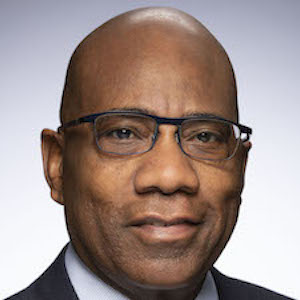 “At Morgan, we are steadfast in our commitment to conducting research that not only advances science but also transforms communities,” said President David K. Wilson. “These new NSF investments in Morgan ingenuity, resourcefulness, and inventiveness underscore our ascendency as a leading urban research university — one that produces solutions to society’s greatest challenges while preparing the next generation of innovators. As we continue on our path toward R1 status, it is with great intention that Morgan will represent a national model for purposeful, public-impact research.”