

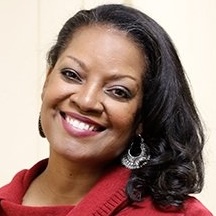
 Brendesha Tynes, professor of education and psychology at the University of Southern California, recently published a new study on the day-to-day impact of race-related online experiences on Black adolescents’ mental health.
For their study, Dr. Tynes and her co-authors examined data regarding a large group of Black youth ages 11 to 19 who participated in the National Survey of Critical Digital Literacy in December 2020. Each afternoon for seven consecutive days, the participants reported their daily online digital literacy, race-related challenges and activities, and their depressive and anxiety symptoms experienced in the prior 24 hours.
On average, the participants reported a total of six online race-related experiences per day, with an average of 3.2 considered online racism and 2.8 considered positive experiences. Participants who had recently experienced online racism – such as discrimination, exposure to traumatic race-related content, or algorithmic bias – were more likely to report next-day anxiety and depressive symptoms.
“This is an important addition to the online racism literature, especially considering the rise in racism that is powered by racist algorithms,” the authors write.
In contrast, positive racial socialization experiences were not associated with poor mental health outcomes. The authors highlight this finding as a potential avenue for future research on improving mental health outcomes for Black youth.
“Perhaps most promising is that adolescents’ positive experiences with race online were not negatively associated with their mental health,” the authors write. “Although they may encounter some negative historical and contemporary information about their culture or racial group, it does not have adverse consequences. This is consistent with cultural socialization research that suggests that learning about history and culture can be beneficial for young people’s well-being.”
At the University of Southern California’s Rossier School of Education, Dr. Tynes holds the Dean’s Professorship in Educational Equity and serves as director of the Center for Empowered Learning and Development with Technology.
Professor Tynes earned a bachelor’s degree in history from Columbia University. She holds a master’s degree in learning sciences from Northwestern University and a Ph.D. in human development and psychology from the University of California, Los Angeles.

Give me a DAMN break. If these so-called native born Black American parents (regardless of their SES status or degrees) did their job and explained to their “Black youth children” about the daily RACIAL REALITIES they’ll encounter in the US, this wouldn’t be a problem for them. Racism is endemic and inculcated into this society. MAN UP BLACK PEOPLE.
Only 3?!
They ain’t barely even tryin.