

 by Porsha Haynes
The statistics surrounding Black men in American higher education describe a quiet, systemic crisis. Nationwide, roughly 40 percent of Black men graduate within six years, the lowest rate among any major demographic group. Additionally, undergraduate enrollment for Black men has declined by over 20 percent since 2010.
When we look at Predominantly White Institutions (PWIs), the Black experience can translate into an isolating human experience. Black men arriving on these campuses step into an environment where they may not be reflected in the faculty, the curriculum, or the student body. Instead, they find themselves questioning their belonging, navigating daily microaggressions, and managing what critical race theorist Dr. William A. Smith rightly termed “racial battle fatigue.” For decades, standard university interventions have tried to remedy these silos, but these efforts often treat Black students as a monolith, failing to address the systematic and social barriers that they experience daily.
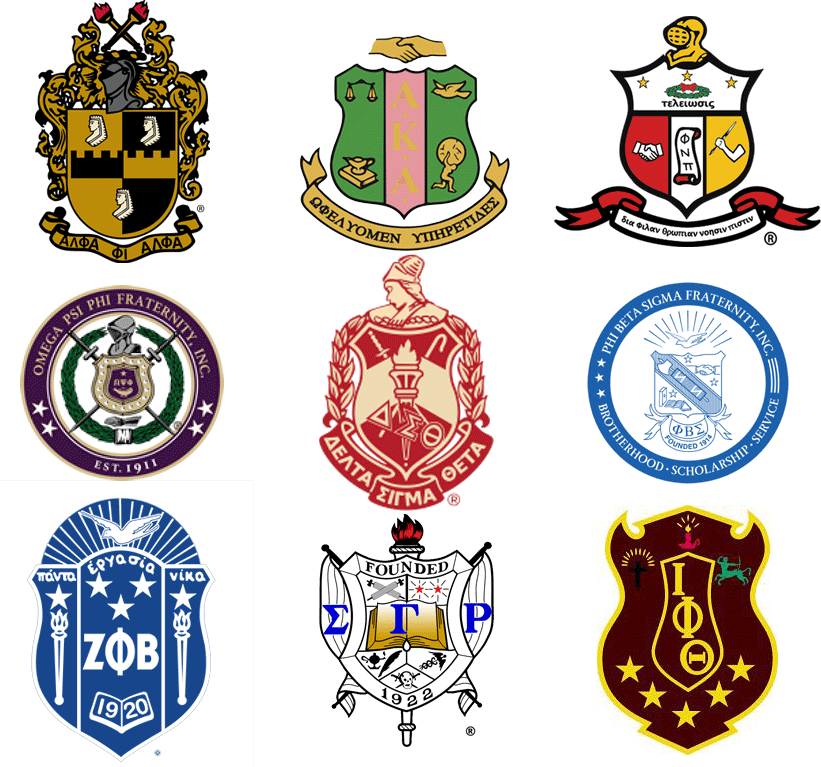
If higher education administrators want to explore the intricacies that deter Black men from attending, or remaining at these institutions, they may want to stop looking for new, administrative top-down solutions. Instead, they should engage and seek guidance from an enduring, organic source of resilience that has thrived on some campuses for over a century: Black Greek Letter Organizations (BGLOs) made up of five fraternities and four sororities, collectively known as the Divine Nine.
Founded in the early twentieth century during an era of exclusion, fraternities within BGLOs were built on foundational principles of brotherhood, scholarship, community service, and perseverance. They were designed to be sanctuaries. My recent research, analyzing the lifelong trajectories of Black men who graduated from PWIs, confirms that these organizations continue to serve as vital, community-building mechanisms for undergraduate success in places where some feel isolated.
To the unfamiliar, fraternities are often dismissed as social clubs or networks for professional advancement connections post-college. While BGLOs certainly provide robust professional avenues, their impact at PWIs runs much deeper. For the men I interviewed, their fraternity was an intellectual, community-service-based, and culturally safe space during and after their undergraduate experience. The dynamics of BGLO chapters at PWIs offer a unique sense of solidarity. Because these chapters are typically much smaller than their counterparts at Historically Black Colleges and Universities (HBCUs), the bonds forged within them are incredibly close. The fraternity offers a rare micro-community where Black men can drop their guards, escape the isolation, and simply exist without apology.
As one alumnus beautifully summarized during our discussions: “It dispels the myth of a monolith. It allows someone to just enjoy being a Black man and know that it’s okay.” The impact of this affiliation does not expire at graduation. Decades after leaving their respective campuses, the men in the study noted that their fraternity membership remains a cornerstone of their adult identity. They do not merely look back on their college days with nostalgia, they carry a lifelong commitment to service, leadership, and collective community uplift. Over time, the specificity of their individual organization integrates into a shared alignment with the broader Divine Nine mission and identity.
Higher education leaders can no longer afford to treat BGLOs as peripheral student groups. If universities are genuinely committed to moving the needle on Black male retention and graduation, they must view these organizations as strategic partners, engaging in open, consistent dialogues regarding inclusion initiatives, academic resources, and campus climate in the hopes that they can bridge the gap between their diversity rhetoric and the lived reality of their students. To change the trajectory for Black men in higher education, we must champion the structures that have always known how to protect, educate, and uplift them, all while continuing to allow them to exist in these historically important spaces.
 Porsha Haynes is a higher education professional specializing in strategic coordination, data-driven reporting, and cross-institutional collaboration. She currently supports operational impact within Strategy, Planning & Advancement Services at a leading Ivy League institution. Dr. Haynes has a doctorate in educational and organizational leadership from Holy Family University, anchoring her practical expertise in rigorous academic theory. Rooted in her background as a Philadelphia native, her vital research explores the intersection of campus environments and student success, focusing on how safe spaces drive retention for Black students at predominantly White institutions.