

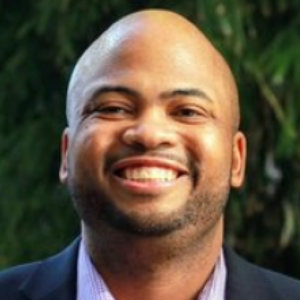
 Black adults who worship in multiracial congregations are more likely to be politically disengaged than Black adults who worship in Black congregations, according to a new Brookings Institution study authored by Ryon Cobb, assistant professor of social work and the Chancellor’s Scholar for Inclusive Excellence in Research on Black Americans at Rutgers University in New Jersey.
While the vast majority of Black Americans lean Democrat in their political views, where they worship shapes their politics. Drawing from numerous prior studies and national surveys, Dr. Cobb’s research shows that about 60 percent of religiously active Black adults worship in a Black congregation, about a quarter worship in multiracial congregations, and 13 percent worship in White or other congregations.
Among Black adults attending Black congregations, 90 percent lean Democrat, 7 percent lean Republican, and 3 percent are politically unaffiliated. Black adults attending multiracial congregations are three times as likely as Black adults attending Black congregations to be politically disengaged. Those attending White congregations are twice as likely as those attending Black congregations to be politically disengaged and more than twice as likely to lean Republican.
Notably, Black adults who were raised in Black congregations are more likely to lean Democrat in adulthood, regardless of their current congregation. Among Black adults who attended a Black congregation in childhood but now attend a White congregation, 82 percent lean Democrat, 15 percent lean Republican, and 3 percent are politically disengaged (among all Black adults attending White congregations, those same figures are 75 percent, 19 percent, and 6 percent, respectively). For those who now attend a multiracial congregation, 80 percent lean Democrat, 12 percent lean Republican, and 8 percent are politically disengaged; these figures are nearly identical to the overall political affiliations of Black adults attending multiracial congregations.
“This doesn’t prove causation, but it rules out the most obvious alternative,” writes Dr. Cobb. “The same upbringing but a different Sunday produces different politics. Black-majority congregations forge political identity through sermons, shared experience, and collective action. When people exit those spaces, the politics go with them.”
Dr. Cobb cites prior research that found Black-led multiracial congregations generate far less political disengagement than White-led ones, and when a multiracial congregation has a Black leader, members of all races show higher levels of civic and racial justice engagement. However, clergy of color who do join multiracial congregations often report being sidelined by their White colleagues.
“Multiracial congregations that wish to retain Black civic engagement must refuse the managed diversity bargain, the pretense that unity requires setting racial justice aside,” writes Dr. Cobb. “That means teaching the history of the Black church alongside scripture, naming injustice from the pulpit, and protecting the testimonial practices through which Black political identity has always been formed.”
He concludes, “Integration and political power are not the same force, and right now they move in opposite directions. The question is not whether to integrate. The question is who gets to lead when you do, and whose vote still counts when you get there.”
Dr. Cobb has been a faculty member with Rutgers University since 2022. He previously taught at the University of Georgia and the University of Texas at Arlington. He holds a bachelor’s degree in secondary education from Indiana University and a Ph.D. in sociology from Florida State University.
