

 Virginia Commonwealth University has approved plans to construct a memorial and to inter the nineteenth-century human remains found in an abandoned well on campus.
The remains were first discovered in 1994 during the construction of the university’s Hermes A. Kontos Medical Sciences Building. At that time, archaeologists were only given a short time to examine the site and the remains were sent to the Smithsonian Institute for further study. According to new DNA research, the remains are from a minimum of 43 adults and three children. Researchers believe these individuals, the majority of whom were of African ancestry, were discarded in the well in the 1800s after medical students and faculty dissected and practiced surgical procedures on unlawfully obtained cadavers.
In 2011, Professor Shawn Utsey released the documentary film Until the Well Runs Dry: Medicine and the Exploitation of Black Bodies, which renewed interest in the remains and prompted the university to take further action to honor the deceased. In 2013, VCU President Michael Rao formed the East Marshall Street Well Planning Committee. Over the next several years, the committee held a series of community meetings, explaining what had been done to safeguard the remains, providing insights into results from forensic studies, and acknowledging VCU’s insensitivity during the initial 1994 excavation. The committee also helped form the Family Representative Council to include local community members in future memorial plans.
The ancestral remains were returned to VCU in 2019. Two years later, the university installed a set of panels in the Kontos Building to tell the story of the East Marshall Street Well and the individuals whose remains were discarded in it.
In summer 2027, construction is slated to begin on a new memorial and interment site located at the south end of the plaza between the Kontos Building and the Egyptian Building. The site will feature a “unity chamber” inspired by the Toguna structures of Dogon culture in West Africa. The project is estimated to cost $3.6 million and will be funded by MCV Foundation Support, VCU non-Education and General funds, and VCU Health System funds.
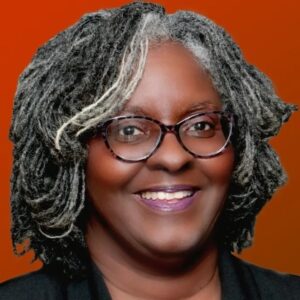 “This announcement of plans for the construction of a memorialization and interment site represents forward movement of not only our desire to properly inter the ancestral remains but it also satisfies the recommendations from the Family Representative Council as given in our report,” said Rhonda Keyes Pleasants, chair of the Family Representative Council. “Furthermore, to finally and properly memorialize and inter the ancestral remains is satisfaction to the ancestors who have gone before us.”
She continued, “The completed project will for many generations to come represent not just the remains that were found but also those believed to be still buried in other wells in the same vicinity of the Kontos Building. We honor the research that has taken place and look forward with great anticipation finally laying our loved ones to rest.”